
Reviewed · COOKING CLASSES
Tokyo: Japanese Knife Skills and Sashimi & Tempura Cooking Class
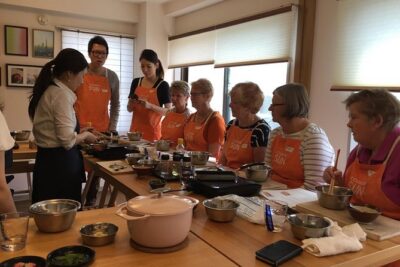
Tokyo does knife skills right. This class is hands-on, small, and very practical, built around Japanese knife technique and a real lunch you make yourself. The pace is structured but friendly, with help from Amy, an English-fluent guide, plus a Japanese chef who watches your cuts and sharpening.
Two things I really like: you spend real time on knife care and sharpening, not just watching; and you get to practice sashimi and decorative vegetable cuts in a guided, step-by-step way. One thing to consider: decorative cutting takes focus and patience, so if you want only easy results fast, you may feel a bit challenged at first.
In This Review
- Key Highlights You’ll Actually Feel in Your Hands
- Where Nishi-Koyama Fits Into Your Tokyo Day
- Meet, Walk In, Then Get Straight to Knife Care
- The Sharpening Lesson: Why It’s More Valuable Than It Sounds
- Sashimi Cutting Practice: Clean Cuts, Real Technique
- Decorative Vegetable Cuts: Where Patience Gets Rewarded
- Tempura and Lunch: Eating After You Learn
- Price and Value: What You’re Paying For (and What You Get Back)
- Who Should Book This Class in Tokyo
- Small Details That Make It Easier
- Should You Book This Japanese Knife Skills and Sashimi & Tempura Class?
- FAQ
- Where do I meet for the class?
- How long is the Japanese knife skills and cooking class?
- What time does the experience start?
- What do you do in the class?
- Is lunch included?
- Are knives provided?
- Is the class private?
- How large is the group?
- Is transportation from hotels included?
- What is the cancellation policy?
Key Highlights You’ll Actually Feel in Your Hands
- Private, two-person-style attention with a chef watching your technique closely
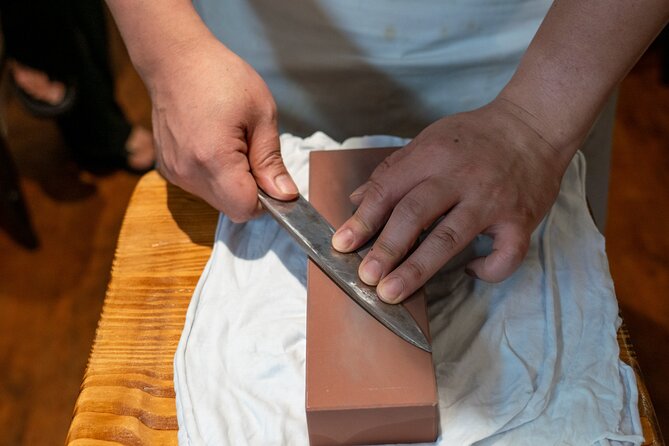
- Knife sharpening and care explained in a way you can use at home
- Sashimi slicing practice focused on clean, precise cuts
- Decorative vegetable cutting for that extra Japanese presentation touch
- Sashimi and tempura lunch included (you eat what you prepare)
- Small group size (maximum 6) keeps the class from feeling crowded
Where Nishi-Koyama Fits Into Your Tokyo Day
If you like Tokyo that isn’t only about big-name sights, Nishi-Koyama is a smart pick. You’ll meet at Nishi-Koyama Station (ground level exit) and then take a short walk to the venue with your guide. The neighborhood vibe matters here: you’re not rushing between major attractions. You’re in a setting designed for doing the work.
Timing also helps. This class starts at 12:00 pm, so it’s a very natural “midday anchor” for your itinerary. You’ll have a clean arc: learn, cook, then sit down and eat. If your Tokyo plans sometimes feel like a checklist, this gives you a skill-centered block that feels calmer.
And yes, this experience is built for accuracy. The whole point is precision: how you hold the knife, how you sharpen, and how you cut ingredients so they look right and taste right.
Readers also shortlisted these Tokyo bookings:
- Ramen & Gyoza Cooking Class in Tokyo with Local Supermarket Visit
★ 5.0 · 823 reviews - Tokyo: Easy Ramen Cooking Experience in Kabukicho, Shinjuku
★ 4.6 · 321 reviews - Ramen and Sushi Cooking Class with Sake Pairing Set in Tokyo
★ 5.0 · 291 reviews - Tokyo: Wagyu and 7 Japanese Dishes Cooking Class
★ 4.9 · 273 reviews
Meet, Walk In, Then Get Straight to Knife Care
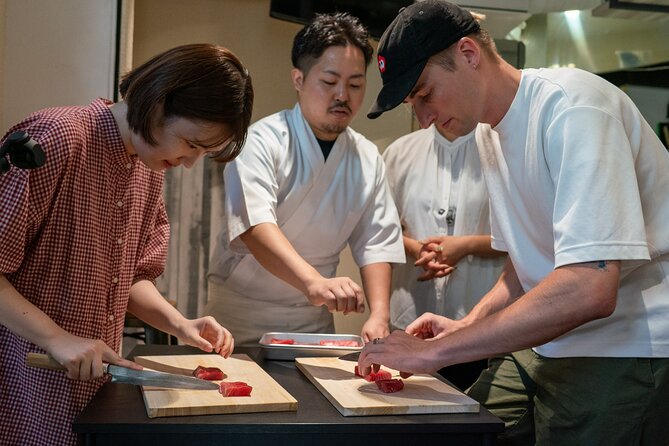
Plan for a simple flow that keeps you moving but not rushed.
1) Meet at Nishi-Koyama Station
You’ll find the starting point at the station’s ground level exit. From there, you’ll walk to the venue with your guide (about 10 minutes). That walk matters more than you might think: it gives you a minute to settle in before the knife part starts.
2) Knife care and sharpening lecture (about 50 minutes)
This is the core foundation. The class doesn’t treat sharpening as a side note. You’ll learn how Japanese knives are cared for and handled, and you’ll get the “why” behind the technique.
3) Cooking session: sashimi and tempura (about 30 minutes)
Once the setup is clear, you shift from lecture mode to doing. This is when knife skills turn into food.
4) Eat what you made (about 30 minutes)
Then you sit down and enjoy the lunch you prepared, which is a handmade sashimi meal alongside a tempura platter.
At roughly 2 hours total (including the walk and time to eat), it’s a compact experience. That makes it easier to fit into Tokyo without sacrificing your whole day.
The Sharpening Lesson: Why It’s More Valuable Than It Sounds
Knife sharpening is where most food experiences stay vague. This one doesn’t. You’re taught how to sharpen and care for Japanese knives, and the lesson is long enough to actually stick.
Here’s why this part matters for you: Japanese knives are not just “sharp.” They’re designed around a specific edge and feel. If you treat them like generic kitchen tools, performance drops fast. Learning care and sharpening directly from a chef-guided setup gives you something practical you can carry home.
Also, the tone is human. In the reviews, people highlight that Amy and the chefs make you feel comfortable, and the chef is patient while teaching. That matters because sharpening can feel intimidating if you’re worried about messing up. You want guidance that turns anxiety into doable steps.
If you already own a Japanese knife from your travels, this lesson is especially worth it. The class even invites you to bring your own knife if you bought one while in Japan. If you don’t have one, you still use the provided knives and learn the method.
Sashimi Cutting Practice: Clean Cuts, Real Technique
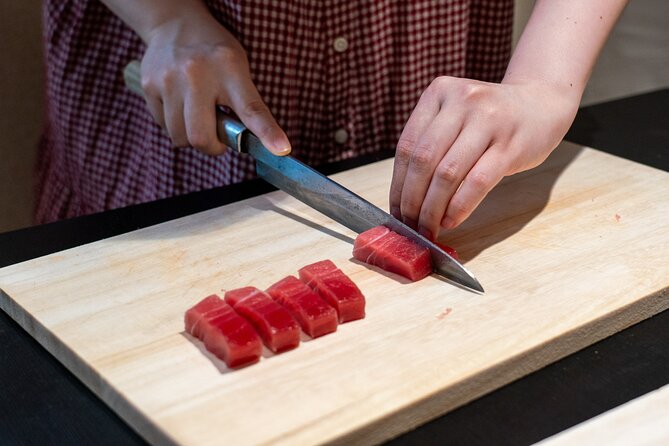
After the knife foundation, you’ll practice slicing sashimi. This isn’t a “watch and hope” situation. You get hands-on practice with guidance as you learn how to cut ingredients with precision.
Sashimi is a great test skill because sloppy technique shows immediately. You’re dealing with texture, grain, and the need for a controlled, confident motion. The chef helps you with that feel: how to position the knife, how to control the angle and pressure, and how to execute slices consistently.
This is also where the private format helps. With a class designed for two, you’re more likely to get specific feedback on what your knife hand is doing. That feedback is hard to get in bigger groups.
You’ll also do cutting for the overall meal prep, so you’re not just making pretty slices. You’re learning a kitchen workflow: sharpen → cut → plate.
Decorative Vegetable Cuts: Where Patience Gets Rewarded
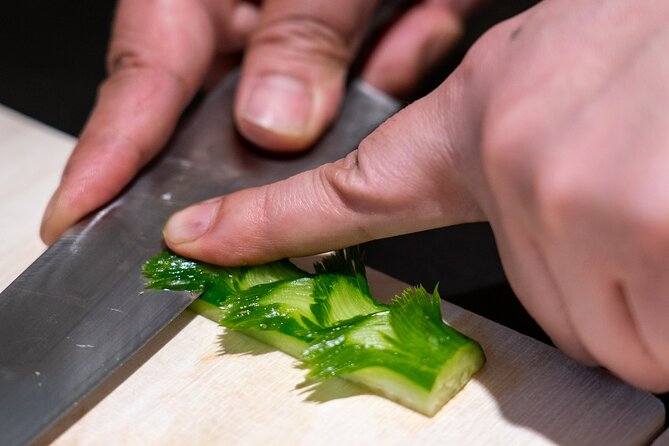
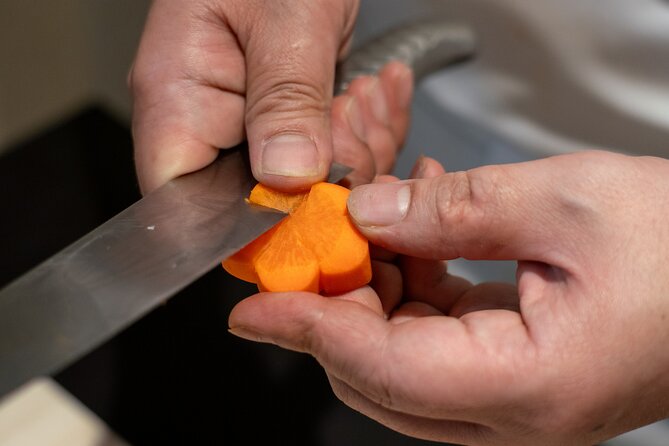
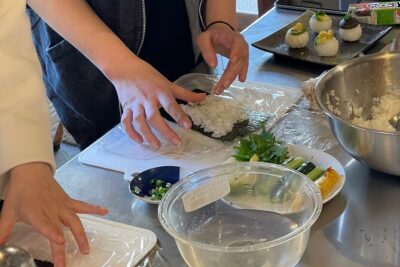
The vegetable decorative cuts are one of the most talked-about parts, and for good reason. They look simple when you see them in photos, but doing them well takes coordination and care.
In reviews, people describe the decorative cutting as difficult at first, and that difficulty is actually part of the value. When you struggle a little, you start to respect the craftsmanship. And then, with coaching, the cuts improve faster than you expect.
This section is also practical for you as a home cook. Decorative cuts are the step between “I can cook” and “I can make food look intentional.” Even if you never go full Japanese kaiseki style at home, these skills can upgrade everyday meals.
Just know the trade-off: this is hands-on practice, not a casual garnish station. If you’re the type who wants everything handed to you, you might find this portion demanding. If you like learning technique, you’ll likely enjoy it.
Readers also shortlisted these Tokyo bookings:
- Sushi Making Tokyo Roll and Authentic Japanese Sushi Class★ 5.0 · 3,971 reviews
- Tokyo: Roll and Authentic Sushi Making Class in Asakusa★ 4.9 · 1,957 reviews
- Tokyo Shinjuku Chopsticks Making Class★ 5.0 · 1,763 reviews
- Tokyo: Sushi Making Class in a Happi Coat near a Famous Spot★ 4.9 · 1,377 reviews
- Chopstick Making Workshop in Ginza★ 4.8 · 1,366 reviews
Tempura and Lunch: Eating After You Learn
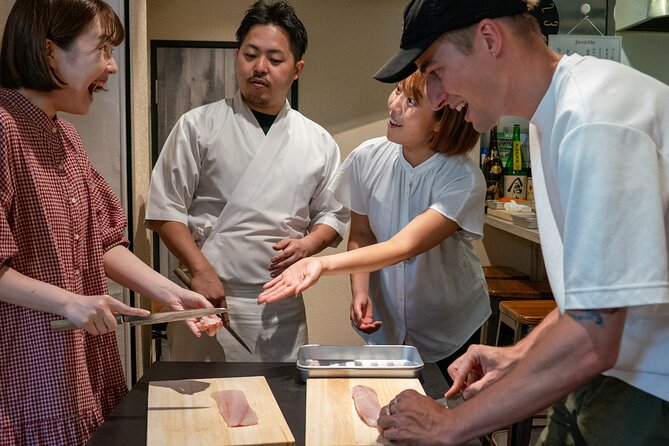
After the cutting practice, you shift into the cooking session focused on sashimi and tempura. You’ll prepare your own meal and then eat it.
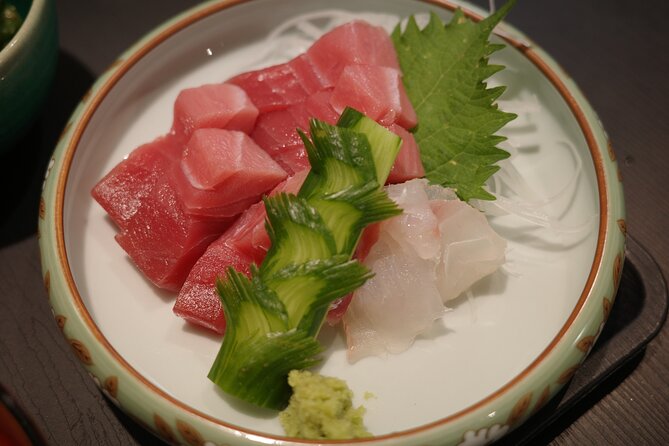
I like this structure because it removes the awkward question of, Will I actually taste what I worked on? Here, the answer is yes. You sit down for a handmade sashimi and tempura lunch, then you can evaluate your work like a critic, but with the chef’s technique fresh in your mind.
Tempura also plays a different role than sashimi. Sashimi is about precision cutting and texture. Tempura is about handling ingredients and creating a finished dish. That contrast makes the class feel complete: you learn knife work and then you connect it to a second cooking style.
You also get the “aftertaste” learning moment. Once you’ve eaten, you understand why a clean cut matters for presentation and how the cooking outcome reflects your prep.
Price and Value: What You’re Paying For (and What You Get Back)
At $123.79 per person, this isn’t a budget snack. But it’s not just a generic food tasting either. You’re paying for:
- A structured knife care and sharpening lesson
- Hands-on practice with sashimi slicing
- Instruction on decorative vegetable cutting
- A lunch you make and eat (sashimi plus tempura)
- A small, focused format: a private class for two, with a maximum group size of 6
The value gets clearer when you think about outcomes. If you leave only with photos, it feels pricey. If you leave knowing how to care for and sharpen your knife, plus you can cut sashimi-style slices and decorative veg, it becomes a skill investment.
Also, the guide support matters. The class includes a Japanese guide who’s English-fluent, so you’re not stuck guessing instructions while holding a dangerous tool. That support lowers the learning curve and helps you feel safe.
One practical note: lunch is included, but transport isn’t. So you’ll want to plan your route and time to arrive near Nishi-Koyama Station.
Who Should Book This Class in Tokyo
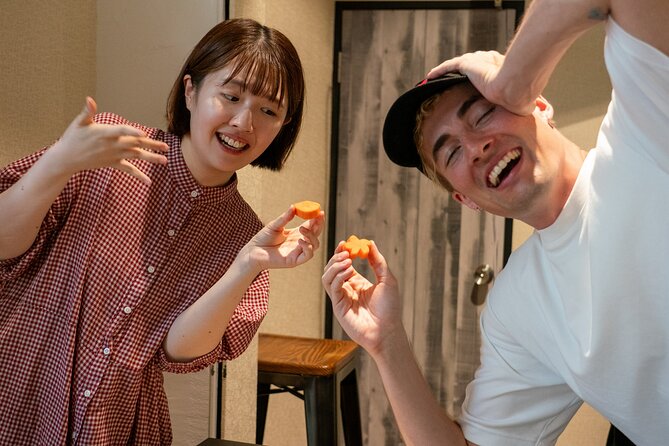
This experience fits best if you:
- Own a Japanese knife and want to care for it properly
- Want hands-on skill learning, not only a meal
- Enjoy structured instruction where someone corrects your technique
- Are curious about both the craft (knife skills) and the payoff (a lunch you made)
It’s also a good choice if you’re traveling solo. The class has a minimum of 2 participants, so solo booking typically works because they can pair people into the two-person setup.
If you’re the type who wants mostly sightseeing during the day, treat this like a dedicated workshop slot. It will take your attention, and that’s the point.
Small Details That Make It Easier
A few practical things help you enjoy this more:
- Knives are provided, but you can bring your own if you purchased one in Japan
- You only really need to bring yourself; the class supplies the tools for practice
- The class is near public transportation, and the meeting point is clear at Nishi-Koyama Station
- Expect the rhythm to be teaching-first, cooking-second, eating-third
- You’ll return to the venue area where you started
If you want the best learning moment, slow down mentally as you arrive. This is the kind of activity where a calm attitude helps you absorb instructions while your hands learn the motion.
Should You Book This Japanese Knife Skills and Sashimi & Tempura Class?
I’d book it if you want a Tokyo experience that feels useful after you go home. Knife sharpening, sashimi slicing, and decorative cuts are real-world skills, and the lunch component makes it satisfying.
Skip it only if you’re not interested in precision work. The decorative cutting can feel tricky at first, and the class is designed for learning technique, not effortless results.
If you’re even mildly curious about Japanese knives, or you brought one home already and want to use it well, this is a strong fit. It’s small, structured, and focused on skills that actually transfer. And after two hours, you’ll have both knowledge and a meal made with your own hands.
FAQ
Where do I meet for the class?
You meet at Nishi-Koyama Station (ground level exit).
How long is the Japanese knife skills and cooking class?
The class runs for about 2 hours.
What time does the experience start?
The start time is 12:00 pm.
What do you do in the class?
You get a lecture on knife care and sharpening, then you practice sashimi slicing and decorative vegetable cutting, and you prepare sashimi and tempura for lunch.
Is lunch included?
Yes. Lunch is included and consists of the sashimi and tempura you prepare.
Are knives provided?
Yes, knives are provided. If you bought a Japanese knife during your travels, you can bring it along.
Is the class private?
It is described as an exclusive private class for two, with personalized chef attention.
How large is the group?
The class has a maximum of 6 travelers.
Is transportation from hotels included?
No. Private transportation and hotel travel/transportation are not included.
What is the cancellation policy?
You can cancel for a full refund up to 24 hours before the experience’s start time. Cancellations made less than 24 hours before the start time are not refunded.
More Workshops in Tokyo
- Sushi Making Tokyo Roll and Authentic Japanese Sushi Class
★ 5.0 · 3,971 reviews - Tokyo: Roll and Authentic Sushi Making Class in Asakusa
★ 4.9 · 1,957 reviews - Tokyo Shinjuku Chopsticks Making Class
★ 5.0 · 1,763 reviews - Tokyo: Sushi Making Class in a Happi Coat near a Famous Spot
★ 4.9 · 1,377 reviews - Chopstick Making Workshop in Ginza
★ 4.8 · 1,366 reviews
More Cooking Classes in Tokyo
- Ramen & Gyoza Cooking Class in Tokyo with Local Supermarket Visit
★ 5.0 · 823 reviews - Tokyo: Easy Ramen Cooking Experience in Kabukicho, Shinjuku
★ 4.6 · 321 reviews - Ramen and Sushi Cooking Class with Sake Pairing Set in Tokyo
★ 5.0 · 291 reviews - Tokyo: Wagyu and 7 Japanese Dishes Cooking Class
★ 4.9 · 273 reviews - Tokyo Washoku 4-hour Cooking Class: From Market to Table
★ 5.0 · 253 reviews
More Tour Reviews in Tokyo
- Mt Fuji and Hakone 1-Day Bus Tour Return by Bullet Train
★ 5.0 · 26,383 reviews - 1-Day Tokyo Bus Tour
★ 5.0 · 14,250 reviews - Tokyo: teamLab Planets TOKYO Digital Art Museum Entry Ticket
★ 4.6 · 9,779 reviews - Mt Fuji & Hakone Cruise, Drum Show Bullet Train 1 Day from Tokyo
★ 4.0 · 7,413 reviews - Tokyo: Shinjuku Food Tour (13 Dishes at 4 Local Eateries)
★ 5.0 · 6,603 reviews
Latest Tokyo reviews off our desk






Cooking Classes, compared.
 ★ 5.0Ramen & Gyoza Cooking Class in Tokyo with Local Supermarket VisitFrom $122823 reviews
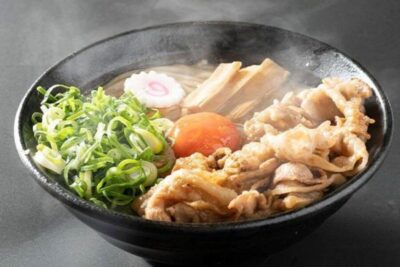 ★ 4.6Easy Ramen Cooking Experience in Kabukicho, ShinjukuFrom $29321 reviews
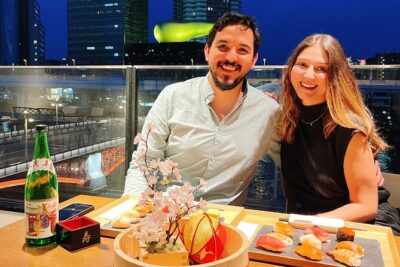 ★ 5.0Ramen and Sushi Cooking Class with Sake Pairing Set in TokyoFrom $79291 reviews
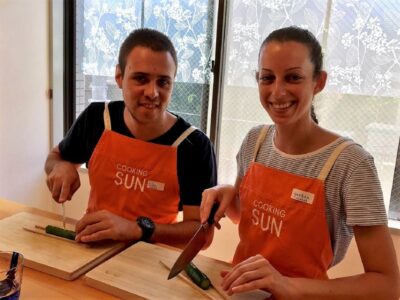 ★ 4.9Wagyu and 7 Japanese Dishes Cooking ClassFrom $67273 reviews
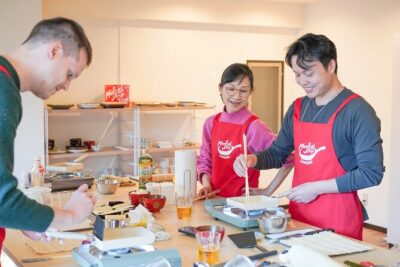 ★ 5.0Tokyo Washoku 4-hour Cooking Class: From Market to TableFrom $79253 reviews
 ★ 5.0Small-Group Wagyu Beef and 7 Japanese Dishes Tokyo Cooking ClassFrom $72190 reviews
 ★ 5.0Private Home Cooking in Yanaka – Local Flavors in a Warm SettingFrom $122173 reviews
 ★ 5.0Tokyo Sushi Making Experience & Japanese Cooking ClassFrom $59150 reviews
Browse the lists this tour appears in