
Reviewed · CRAFT & ARTISAN WORKSHOPS
Tokyo: Kintsugi Workshop to Learn the Art of Golden Joinery
Gold seams change how you see breakage. This Kintsugi workshop in Tokyo turns a fragile moment into something beautiful, teaching you to mend cracked pottery with lacquer and powdered metal. You also get the philosophy side, so it feels more like a guided pause than a rushed craft.
I love two things most. First, the calm, hands-on pace makes it easy to focus on careful steps instead of fighting with tools. Second, you take home the finished piece, so the lesson follows you out of the studio.
One possible drawback: depending on the pottery you’re assigned, you may only repair a small section. So if you’re hoping to rebuild a whole bowl, go in with realistic expectations.
In This Review
- Key Highlights to Look For
- Why Kintsugi Feels Different From a Normal Craft
- Finding the Class at Gakugei Daigaku Station
- What Happens in the 2 Hours: From Filing to Golden Seams
- Materials and the Pottery/Plate Twist (Plan for ¥1,000–2,000)
- Teachers, Small Groups, and the Help You’ll Actually Want
- The Philosophy Lesson You’ll Bring Home
- Value and the Real Cost of $63
- Who This Workshop Suits Best
- Quick Practical Tips Before You Go
- Should You Book This Kintsugi Workshop?
- FAQ
- How long is the Kintsugi workshop in Tokyo?
- Is the workshop taught in English?
- What’s the meeting point?
- What does the price include?
- Do I need to bring a plate or pottery?
- What size is the group?
- Is it wheelchair-friendly?
Key Highlights to Look For
- Gold joinery, not replacement: cracks become a feature using lacquer and powdered gold (or other metals).
- Wabi-sabi thinking: you practice the idea that flaws belong in the story.
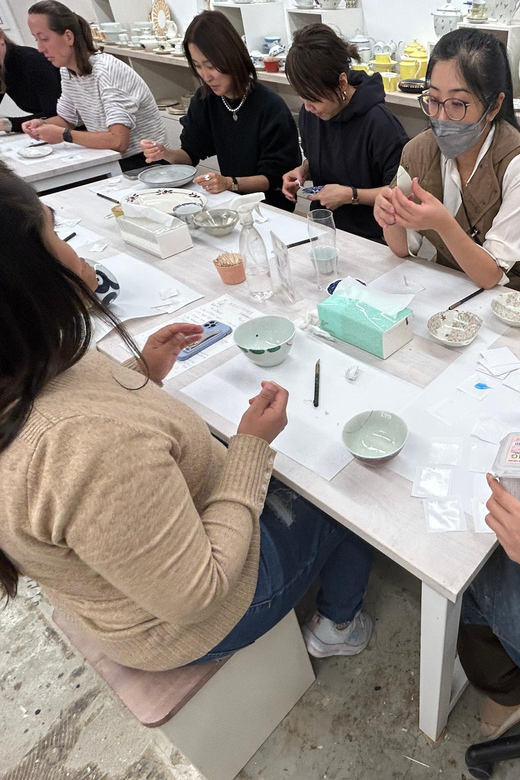
- Hands-on time that actually feels unhurried: the class is 2 hours, with room to slow down and get it right.
- Your teacher’s step-by-step guidance: instructors like Anne and Chiara (and sometimes a translator) explain each stage clearly.
- A keepsake you can display: your repaired piece becomes a personal reminder, not a photo you’ll forget.
Why Kintsugi Feels Different From a Normal Craft
Kintsugi is the rare workshop where the goal isn’t just a pretty result. It’s about changing your relationship to damage. Instead of hiding a break, you highlight it with a glowing seam—so the repair doesn’t erase the past. It respects it.
You’ll learn that Kintsugi—meaning golden joinery—has roots in Japan dating back to the 15th century. It grew from a cultural habit of cherishing what’s broken rather than treating it as trash. That mindset shows up in what you do with your hands: you clean, adjust, and mend, then let the gold line reveal the history.
The class also ties strongly to wabi-sabi, the appreciation of imperfection and impermanence. You don’t need a philosophy degree to get it. You just need time to work slowly and notice how the process shifts your mood. Even if you’re not artsy, the craft has a grounding rhythm.
More hands-on studios our readers booked
- Tokyo Shinjuku Chopsticks Making Class
★ 5.0 · 1,763 reviews - Chopstick Making Workshop in Ginza
★ 4.8 · 1,366 reviews - Kintsugi Experience: Art of Golden Joinery in Tokyo
★ 5.0 · 467 reviews - Tokyo Chopstick Making Workshop with Artisan
★ 5.0 · 466 reviews
Finding the Class at Gakugei Daigaku Station
You meet the guide at Gakugei Daigaku station. Before you go, it helps to plan a calm arrival, because the guide will message a picture of themselves ahead of the meeting time.
This is a small, focused experience—limited to 6 participants—so meeting points matter. If you’re the kind of person who likes a little breathing room before an activity, build it in. Tokyo station areas can be confusing fast, especially if you’re juggling trains, signs, and your phone battery.
Also note the language: instruction is English. That matters here, because Kintsugi is technical enough that “just watch and copy” won’t be as satisfying as clear, step-by-step explanations.
What Happens in the 2 Hours: From Filing to Golden Seams
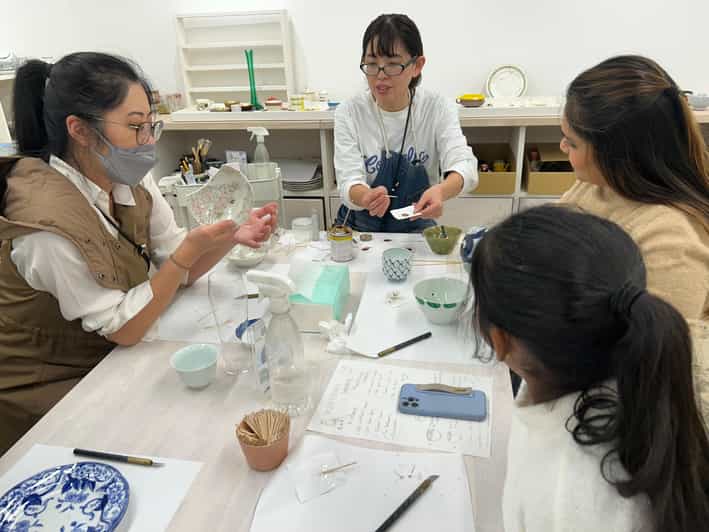
This is a 2-hour workshop, designed so you can complete meaningful steps rather than just start something.
Here’s the flow you can expect, in practical terms:
First, you get a brief introduction to the craft and its philosophy. This isn’t fluff. It sets the tone for why you’re doing things carefully—why you’re not rushing to cover mistakes, but shaping them into the final look.
Then comes the hands-on work. One part you should mentally prepare for: there’s a stretch where you file the pottery edges for about half an hour. That’s long enough to feel real, but it’s also a good time to slow down and build confidence. You don’t just dab glue—you learn how to prep the surface so the mended seam will hold.
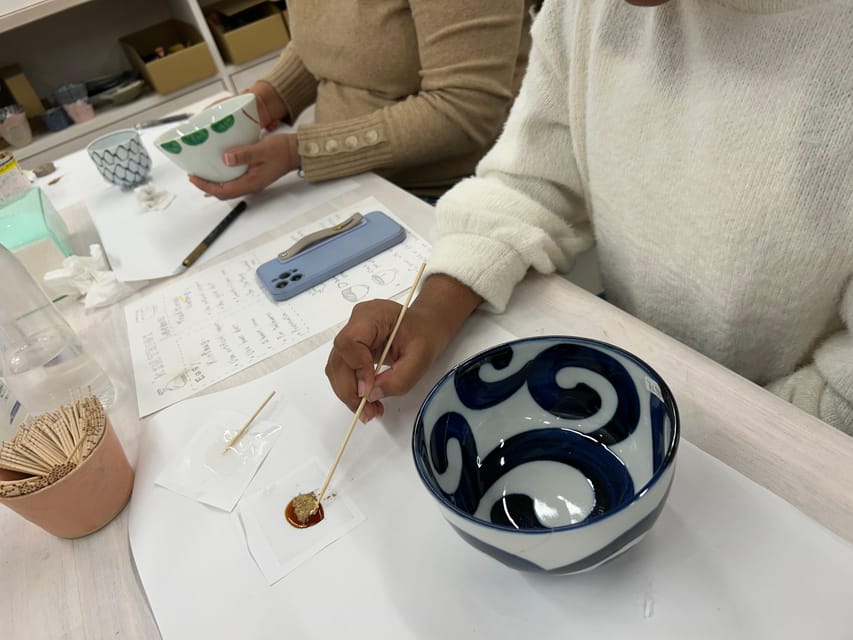
After the prep, you move into the mending stages. The workshop uses lacquer and powdered metal (gold, and possibly silver or platinum depending on what you’re using). Your job is to guide the repair so the seam lines up with the break you’re working on. With the right steps, the crack transforms from a weakness into an intentional design.
Finally, you get to see the finished look and take your piece home. The best part of that ending is psychological: you’re leaving with something you repaired yourself, not a souvenir that always felt slightly generic.
Materials and the Pottery/Plate Twist (Plan for ¥1,000–2,000)
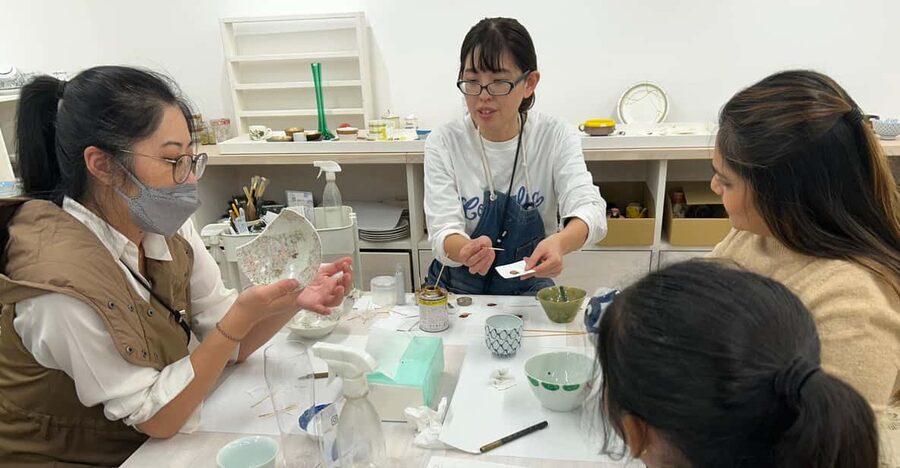
Most of the essential supplies are handled for you—especially lacquer and gold powder. You’ll also be working with a piece of broken pottery as part of the experience.
But there’s an important detail: the workshop notes that a plate to work with may not be included, and it suggests arranging one for ¥1,000–2,000. That’s the one area where you’ll want to confirm exactly what’s covered for your specific session date.
Here’s the practical way to handle it:
- Expect lacquer and powdered metal to be provided.
- Expect to work on a broken ceramic piece.
- Still, budget a little extra or confirm whether the pottery cost is included with your $63 price.
This matters for value. If you show up assuming you’ll definitely get a perfectly sized, fully crackable piece, you might feel surprised at the size of your repair section. That lines up with the one critical note you might run into: some classes end up being more about a repaired area than a full transformation of a big item.
Teachers, Small Groups, and the Help You’ll Actually Want
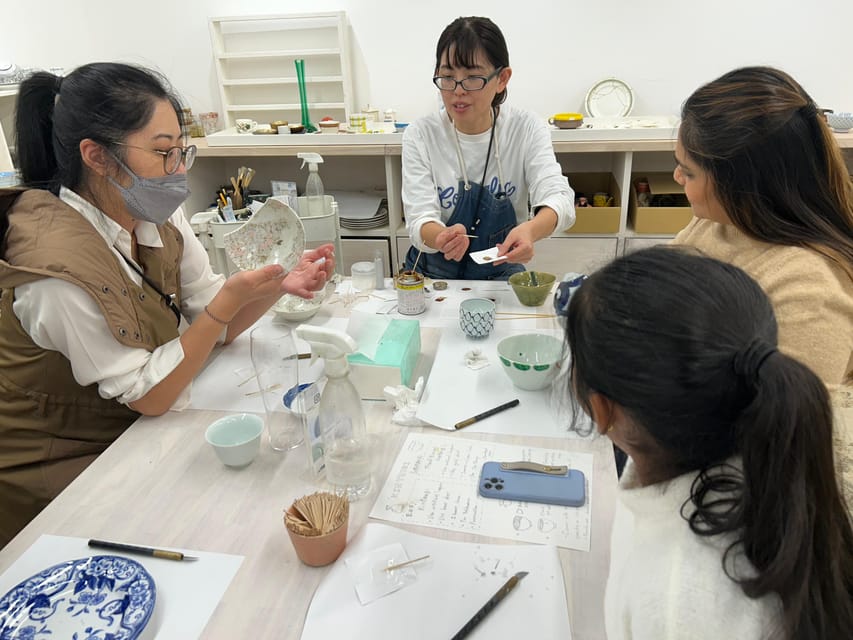
This class is taught by English-speaking instructors, and the group is small—up to 6—which makes a difference with a craft like this. You’re not stuck waiting for attention while other people finish. You get guidance when you need it.
From previous experiences, instructors such as Anne and Chiara have been praised for being organized and clear. One person noted that the teacher explained how the adhesive was made in old times, which adds a meaningful texture to the process. Another highlight: a skilled instructor stepped in with steady, experienced help while still leaving the main work to the student.
Even if you’re a beginner, that style of teaching works. You learn by doing, but you’re not left alone when something gets tricky—especially during the filing and seam alignment parts.
There’s also a calm social vibe. People tend to chat lightly, then focus. And because it’s hands-on, it naturally becomes a shared quiet experience rather than a loud group activity.
Readers also shortlisted these Tokyo bookings:
- Sushi Making Tokyo Roll and Authentic Japanese Sushi Class★ 5.0 · 3,971 reviews
- Tokyo: Roll and Authentic Sushi Making Class in Asakusa★ 4.9 · 1,957 reviews
- Tokyo Shinjuku Chopsticks Making Class★ 5.0 · 1,763 reviews
- Tokyo: Sushi Making Class in a Happi Coat near a Famous Spot★ 4.9 · 1,377 reviews
- Chopstick Making Workshop in Ginza★ 4.8 · 1,366 reviews
The Philosophy Lesson You’ll Bring Home
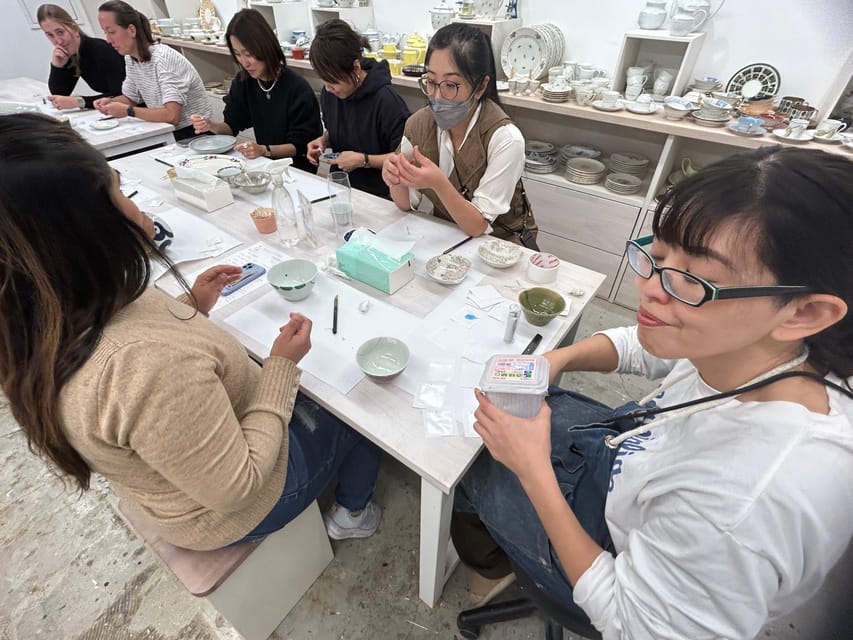
The golden seam isn’t only visual. It’s a way to rethink what counts as damage.
Kintsugi’s core idea is that cracks carry story. When you repair them with lacquer and gold, you’re not erasing the break—you’re making it part of the object’s identity. That’s why this workshop feels reflective instead of purely technical.
You’ll also get a direct connection to Japanese aesthetics through wabi-sabi. The practical translation is simple: imperfection isn’t a flaw in the sense of failure. It’s a feature of life—aging, change, and impermanence.
That philosophy lands best when you see your piece at the end. A repaired crack becomes a line you can point to. It’s a conversation starter on your shelf or in your kitchen, but it’s also a personal reminder that renewal is possible.
And yes, that’s why the “take-home keepsake” matters so much. It’s not just a craft you made; it’s a small object holding a message you can see every day.
Value and the Real Cost of $63
At $63 per person for 2 hours, this workshop isn’t about saving money. It’s about paying for instruction, materials (especially lacquer and gold powder), and the chance to create something with real symbolic meaning.
Here’s how to judge whether it’s good value for you:
It feels like great value if you:
- Want a hands-on Tokyo experience that’s not just looking.
- Like thoughtful activities with structure.
- Want an item you’ll keep and use or display.
- Are interested in Japanese aesthetics beyond surface-level sightseeing.
It might feel expensive if you:
- Expected a big, dramatic repair of a fully broken piece.
- Want the process to be short and low-effort.
- Don’t want to pay extra if a pottery/plate cost applies.
The one caution that shows up: the class can sometimes focus on a smaller repair area depending on the piece provided. If your dream is a total bowl rebuild, clarify what kind of item you’ll be using before you go.
Who This Workshop Suits Best
This is a great fit for people who want an experience with a slower tempo and a clear outcome.
You’ll probably enjoy it if:
- You like crafts, but you also want meaning behind the craft.
- You enjoy quiet, methodical work like filing edges carefully and applying materials precisely.
- You want something that feels personal to bring home.
It may not be your best match if:
- You’re very time-pressured and hate hands-on prep steps.
- You’re looking for a large group party vibe.
- You want a guaranteed full restoration rather than a repair-focused result.
Also, the workshop has a stated limitation: it’s not suitable for babies under 1 year, and there’s a conflicting note about wheelchair access. The activity lists wheelchair accessible, but it also says it’s not suitable for wheelchair users. If you need wheelchair accommodations, your safest move is to contact the provider before booking.
Quick Practical Tips Before You Go
A few things will make your Kintsugi day easier:
Wear clothes you don’t mind getting a little messy. You’ll be working with tools and materials during the filing stage, and craft sessions rarely stay perfectly clean.
Give yourself time to find the meeting point. Gakugei Daigaku station is the anchor point, and the guide messages a picture—still, arriving early helps you feel calm.
Keep your expectations aligned with the repair process. The best results come from careful work, and the point is the seam and story, not pretending the break never happened.
Should You Book This Kintsugi Workshop?
If you want one Tokyo activity that’s both creative and reflective, this is a strong booking choice. The blend of hands-on repair, clear instruction in English, and the chance to take home a meaningful keepsake is exactly the kind of experience that sticks with you.
I’d book it if you’re excited about the philosophy as much as the craft. If you’re more focused on quantity of repair or you hate the idea of filing and careful prep, ask questions first about the size of the piece you’ll work on and whether any extra pottery/plate cost applies.
If you want a souvenir with a story you can actually feel, this class delivers.
FAQ
How long is the Kintsugi workshop in Tokyo?
The workshop runs for 2 hours.
Is the workshop taught in English?
Yes, the instructor is English.
What’s the meeting point?
Meet the guide at Gakugei Daigaku station. You’ll receive a message with a picture of the guide before the meeting time.
What does the price include?
The workshop includes a brief introduction and the main tools/materials such as lacquer and gold powder.
Do I need to bring a plate or pottery?
A plate to work with may not be included, and the activity suggests arranging one for ¥1,000–2,000. You should confirm what’s provided for your specific session.
What size is the group?
The group is small, limited to 6 participants.
Is it wheelchair-friendly?
The information provided includes both that it is wheelchair accessible and that it is not suitable for wheelchair users. If wheelchair access matters for you, contact the operator to confirm what the setup allows.
More Workshops in Tokyo
- Sushi Making Tokyo Roll and Authentic Japanese Sushi Class
★ 5.0 · 3,971 reviews - Tokyo: Roll and Authentic Sushi Making Class in Asakusa
★ 4.9 · 1,957 reviews - Tokyo Shinjuku Chopsticks Making Class
★ 5.0 · 1,763 reviews - Tokyo: Sushi Making Class in a Happi Coat near a Famous Spot
★ 4.9 · 1,377 reviews - Chopstick Making Workshop in Ginza
★ 4.8 · 1,366 reviews
More Tour Reviews in Tokyo
- Mt Fuji and Hakone 1-Day Bus Tour Return by Bullet Train
★ 5.0 · 26,383 reviews - 1-Day Tokyo Bus Tour
★ 5.0 · 14,250 reviews - Tokyo: teamLab Planets TOKYO Digital Art Museum Entry Ticket
★ 4.6 · 9,779 reviews - Mt Fuji & Hakone Cruise, Drum Show Bullet Train 1 Day from Tokyo
★ 4.0 · 7,413 reviews - Tokyo: Shinjuku Food Tour (13 Dishes at 4 Local Eateries)
★ 5.0 · 6,603 reviews
More Artisan Workshops in Tokyo
- Tokyo Shinjuku Chopsticks Making Class
★ 5.0 · 1,763 reviews - Chopstick Making Workshop in Ginza
★ 4.8 · 1,366 reviews - Kintsugi Experience: Art of Golden Joinery in Tokyo
★ 5.0 · 467 reviews - Tokyo Chopstick Making Workshop with Artisan
★ 5.0 · 466 reviews - Tokyo: Shinjuku Chopstick Making Class
★ 4.9 · 440 reviews
Latest Tokyo reviews off our desk




Craft & Artisan Workshops, compared.
 ★ 5.0Tokyo Shinjuku Chopsticks Making ClassFrom $201,763 reviews
 ★ 4.8Chopstick Making Workshop in GinzaFrom $251,366 reviews
 ★ 5.0Kintsugi Experience: Art of Golden Joinery in TokyoFrom $59467 reviews
 ★ 5.0Tokyo Chopstick Making Workshop with ArtisanFrom $26466 reviews
 ★ 5.0Authentic Pure Gold Kintsugi Workshop with Master Taku in TokyoFrom $142217 reviews
 ★ 5.0Calligraphy on Kanji Fan & Scroll with DrinkFrom $53210 reviews
Browse the lists this tour appears in