
Reviewed · KAMAKURA DAY TRIPS
Your Own HANKO Name Seal Activity in Kamakura.
One name. One stamp. A small workshop with real craft. In Kamakura, this Hanko session is interesting because you learn how Japanese name seals work and then design one that’s personal. I especially like the hands-on design step—choosing the seal type, the look/font, and the material options—and the fact you leave with a finished engraved keepsake. One thing to consider: it’s a short, focused morning activity, and you’ll come back later (or request shipping) for pickup, so plan your afternoon around that.
You’ll get a guided explanation of Hanko history and styles, plus help writing your name in Japanese. Then you get to choose the katakana direction and style for an official-looking seal, and you can talk through options like the case and color choices. The vibe is intimate, and the craft details matter—this is not a generic souvenir making class.
In This Review
- Key points before you go
- Why a Hanko workshop is a smart Kamakura souvenir
- Getting oriented: where it starts and how long it takes
- Step-by-step: what you actually do in the workshop
- 1) Learn the history and styles of Hanko
- 2) Write your name in Japanese (with guidance)
- 3) Design the seal type, font, and layout
- 4) Choose material options and seal color
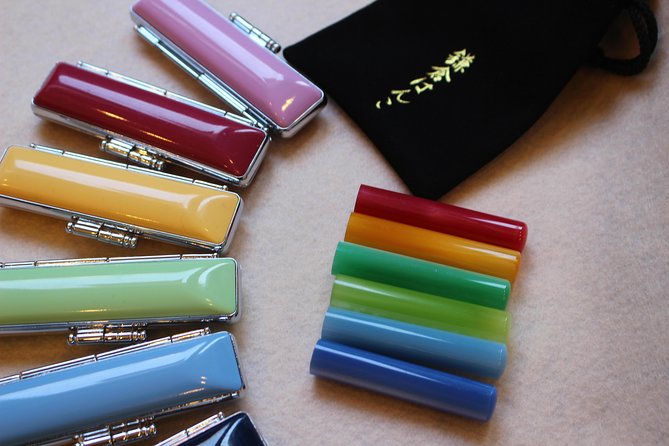
- 5) Pick the case color/type (case is separate)
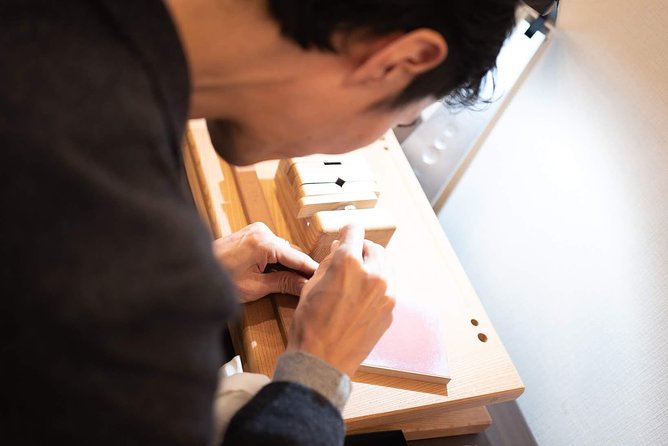
- 6) The engraving process (rough machine, finishing by hand)
- 7) Pickup later in the afternoon
- What you get to take home
- Value for your money: $131.65 and what you’re really paying for
- Practical tips so your seal turns out the way you want
- Who this Hanko workshop is best for
- A quick reality check: the one drawback to plan around
- Should you book this? My honest take
- FAQ
- Is the Hanko workshop in Kamakura a morning or afternoon activity?
- How long does the experience take?
- What’s the meeting point in Kamakura?
- Is it a private experience or shared with strangers?
- What do I design during the workshop?
- What material options are available for the seal?
- What’s included in the price?
- What add-ons cost extra?
- Do I need to pick up in person?
- Is free cancellation available?
Key points before you go
- You design your own katakana seal style so it feels like your name, not a template
- A real engraving process happens: rough carving by machine, final hand finishing
- You choose look and options like acrylic colors (with upgrades available for materials)
- You take the seal home with a pouch included, while the case and ink are optional extras
- Private, small-group feel so you can ask questions and move at your pace
Why a Hanko workshop is a smart Kamakura souvenir
Kamakura has temples, sea air, and photo stops. This is different. A Hanko is personal—almost identity-level personal in Japan—so making one here turns your trip into something practical. You end up with a stamp you can use, not just something pretty to put on a shelf.
This activity also has good structure. You’re not only carving a seal. You start with context: how Hanko writing developed, what styles exist, and how people use seals in daily life. Then the workshop turns that into a decision-making moment where you choose what you want your name to look like in Japanese.
And you’ll feel the craft. The process combines tools and hands: a machine does initial rough carving, and then skilled craftsmen do the final finishing by hand. That matters because it’s the part that gives the stamp its crisp character shapes.
Coast-and-Buddha days near Kamakura, rated
- Tokyo: Kamakura & Enoshima Day Trip including Temple Tickets
★ 4.5 · 1,375 reviews - From Tokyo: Kamakura & Enoshima 1-Day Bus Tour
★ 4.5 · 189 reviews - Kamakura Historical Walking Tour with the Great Buddha
★ 5.0 · 129 reviews - Kamakura Private Tour: Temples, Nature, and the Great Buddha
★ 5.0 · 121 reviews
Getting oriented: where it starts and how long it takes
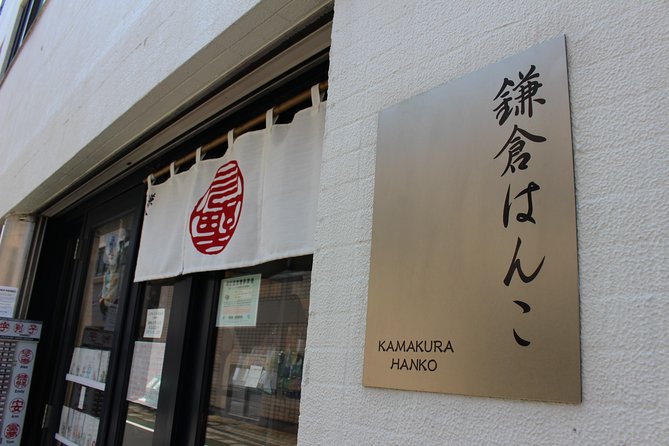
The workshop starts at Kamakurahanko, a Kamakura seal shop near public transportation (5–6 Onarimachi, Kamakura, Kanagawa 248-0012). The activity ends back at the meeting point, so you’re not stuck navigating across town afterward.
The experience is about 45 minutes. It’s set up as a concentrated morning session, and the workshop notes it is only available in the morning. That makes it a good slot for a first activity of the day—especially if you want to hit temples and viewpoints later.
You’ll receive a mobile ticket, and you’ll get confirmation at booking. From a planning standpoint, I like that you’re not waiting around for a long window; you show up, you do the design and creation steps, and then you return later for pickup.
Step-by-step: what you actually do in the workshop
Here’s the flow in plain terms, and why each part is worth your time.
1) Learn the history and styles of Hanko
First you get an explanation of Japanese name seals, including how Hanko writing works and the different styles people choose. This isn’t random trivia. It helps you understand what you’re designing—why certain forms look more traditional or more appropriate for official use.
If you’re the type of person who likes to understand what something means before you touch it, this is the right pacing. You’ll also learn how Japanese characters can be represented for seals, which is useful because your goal is a stamp you can read and recognize later.
2) Write your name in Japanese (with guidance)
Next comes the practical skill step: you learn how to write your name in Japanese for your seal. Your options focus on katakana, and the workshop recommends a katakana font suitable for official seals.
This is where you’ll appreciate the help. Katakana isn’t just about sounds—it’s about the form and proportions that work when engraved. You’ll be supported in choosing characters that reflect your name.
- Kamakura: Private Guided Walking Tour with Local Guide★ 4.8 · 60 reviews
- Kamakura 4hr Private Trip with Government-Licensed Guide★ 5.0 · 58 reviews
- Kamakura Rickshaw Tour★ 5.0 · 53 reviews
- From Tokyo: Kamakura Full Day Tour with a Local Expert Guide★ 4.6 · 43 reviews
- When Emperors Reigned and Shoguns Ruled★ 5.0 · 43 reviews
3) Design the seal type, font, and layout
Then you design the stamp itself. You choose the type of seal (katakana) and the font. The workshop specifically suggests a font suited for official seals, and you can align the style with what you want your seal to communicate.
This is also the moment to slow down. Your stamp is the part you’ll use and show for years. So if anything feels off—character shape, spacing, how your name sits inside the seal frame—this is when to speak up.
4) Choose material options and seal color
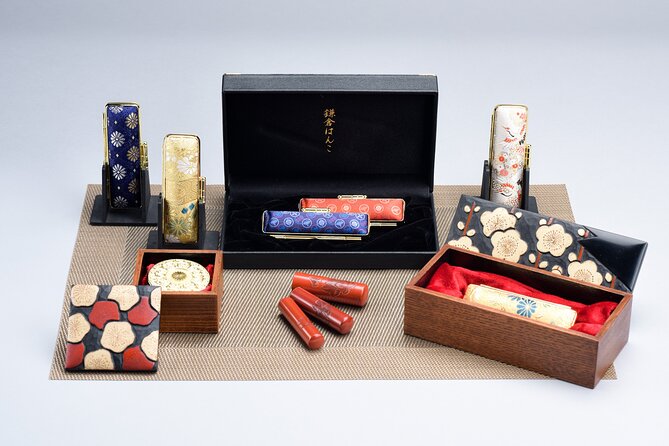
Material choice is part of making it yours. The workshop describes engraving on acrylic with color choices, and it also offers upgrades for other materials such as horn, wood, and gemstone for an additional fee.
One detail I find helpful: the included seal is listed as Japanese boxwood, while the design instructions mention acrylic. Either way, you’re given a choice path, and upgrades are explicitly offered. If you care about the look and feel, ask which base material you’ll be using for your specific seal, and whether your chosen color is tied to acrylic or another option.
5) Pick the case color/type (case is separate)
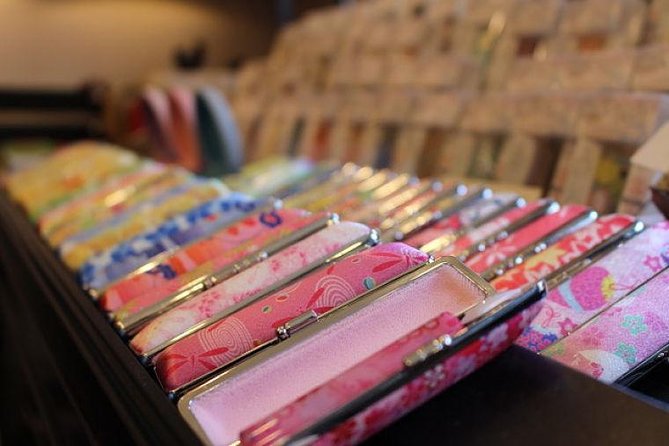
You can choose the case type and color, but it’s noted that the case is sold separately. That means you’re not forced into buying extras, but you can still make it presentable as a gift or a display item.
6) The engraving process (rough machine, finishing by hand)
The workshop explains their engraving method: the initial rough carving uses an engraving machine, then craftsmen do the final finishing by hand. Translation: you get efficiency from the tool, but you still get craft control where it counts—on edges, line quality, and the overall crispness of the seal.
7) Pickup later in the afternoon
You’ll choose a pickup time in the afternoon of the day of the experience. The experience itself is only in the morning, so your morning slot is for design and processing, and your afternoon return is for the finished stamp.
Some people plan around a set return time such as 2pm, but your workshop will let you select what works within the afternoon pickup window.
What you get to take home
Your purchase includes the main souvenir components, and you’ll see what’s included versus optional right away:
Included:
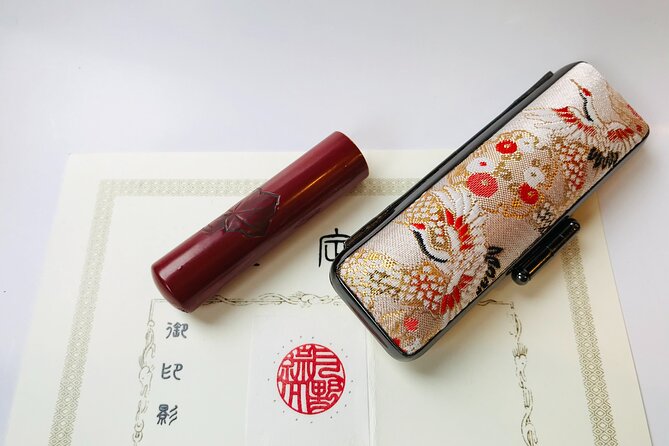
- Hanko seal (Japanese boxwood is listed as included)
- Engraving fee (KATAKANA)
- Original pouch for your Hanko
Not included:
- Shipping unless you request it instead of pickup
- Upgrade material fees (horn/wood/gemstone)
- Character/typeface upgrades
- Hanko case
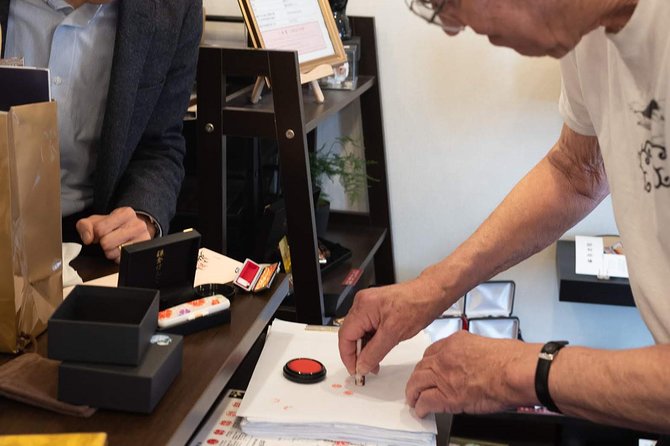
- Red ink (so if you want to stamp with it immediately, plan to bring your own or buy ink separately)
The pouch being included is genuinely helpful. You’ll be able to store the seal safely without scrambling for packaging once you’re back on the move.
Value for your money: $131.65 and what you’re really paying for
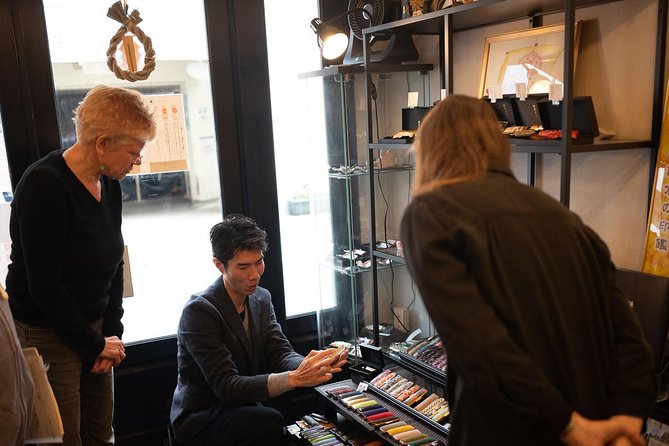
At $131.65 per person for around 45 minutes, this isn’t a budget “make a craft fast” activity. You’re paying for two things that many quick souvenirs don’t deliver:
1) Meaningful customization
You’re not choosing between colors only. You’re making decisions about katakana form, font style, seal layout, and material look. That’s why this feels personal.
2) A real, finished seal from a craftsman process
You’re taking home an engraved object made through a professional workflow—rough carving and hand finishing.
There are also optional upgrades, which can nudge the total cost. If you keep it to the included base options (and skip case/ink/material upgrades), you get strong value: you buy the process, then you leave with a wearable-in-hand souvenir that you can actually use.
A useful planning note: this is often booked about 59 days in advance. If you’re traveling during peak season or you’re tying it to a specific morning schedule in Kamakura, book earlier rather than later.
Practical tips so your seal turns out the way you want
Here’s how I’d approach it if you want maximum satisfaction from the result.
- Bring your name exactly as you want it represented. If you have common spellings, decide what you want to stamp.
- Be ready to choose katakana style and font. The workshop guides you, but it’s still your stamp.
- Ask what’s included versus upgrade options before you commit to materials and case choices.
- Think about how you’ll use it after the workshop. If you want to stamp photos, letters, or souvenirs, plan for ink separately since red ink isn’t included.
- Plan your afternoon pickup slot. If you’re touring temples later, keep at least some flexibility so you can collect your seal at your chosen time.
Who this Hanko workshop is best for
This experience is ideal if you fit one of these profiles:
- You want an authentic Kamakura craft that connects to Japanese identity and daily life.
- You like structured guidance: history first, then design choices, then a finished object.
- You want a personalized souvenir that’s functional, not just decorative.
It’s also a good choice for couples and small groups because the workshop is private—only your group participates. That private setting makes it easier to ask direct questions, and it tends to improve the design conversation.
A quick reality check: the one drawback to plan around
The main catch is timing. The workshop happens in the morning only, and you pick up your finished seal in the afternoon window. If your day is already packed with far-off plans right after check-in, it can feel like you’re juggling.
The other consideration: you’ll need to accept that a customized stamp is a product of trade-offs. If you want higher-end materials or add-ons like a better case, your final total may climb.
Should you book this? My honest take
If you’re deciding between another photo stop and a hands-on craft, I’d book this—especially if you care about Japanese culture beyond the obvious sights and you want something you can carry and use. The combination of history lesson, guided character writing, and a real engraved keepsake makes it feel worth your time.
Skip it only if you want a very casual, walk-in type activity with no planning around pickup. Here, the best experience comes from treating the workshop like a focused morning appointment, then enjoying Kamakura afterward with your stamp ready to pick up.
FAQ
Is the Hanko workshop in Kamakura a morning or afternoon activity?
It’s available in the morning only. You’ll choose a pickup time in the afternoon of the same day.
How long does the experience take?
Plan for about 45 minutes for the workshop.
What’s the meeting point in Kamakura?
It starts at the Kamakurahanko shop at 5–6 Onarimachi, Kamakura, Kanagawa 248-0012, Japan.
Is it a private experience or shared with strangers?
It’s private. Only your group participates.
What do I design during the workshop?
You learn about Hanko and then choose the katakana seal type, font/style, and material options, with help writing your name in Japanese.
What material options are available for the seal?
The instructions mention engraving on acrylic with color choices, and also offer upgraded materials such as horn and wood for an additional fee. Gemstone is also listed as an upgrade option.
What’s included in the price?
Included items are listed as a Hanko seal (Japanese boxwood), the engraving fee for KATAKANA, and an original pouch for your Hanko.
What add-ons cost extra?
Not included are the upgraded material fees (like horn/wood/gemstone), character/typeface upgrades, the Hanko case, and red ink. The case and ink are separate decisions.
Do I need to pick up in person?
You can pick up in the afternoon as scheduled. Shipping is optional if you request it instead of pickup.
Is free cancellation available?
Yes. You can cancel up to 24 hours in advance for a full refund.
More Tour Reviews in Kamakura
- Tokyo: Kamakura & Enoshima Day Trip including Temple Tickets
★ 4.5 · 1,375 reviews - From Tokyo: Kamakura & Enoshima 1-Day Bus Tour
★ 4.5 · 189 reviews - Kamakura Historical Walking Tour with the Great Buddha
★ 5.0 · 129 reviews - Kamakura Private Tour: Temples, Nature, and the Great Buddha
★ 5.0 · 121 reviews - Kamakura Walking Tour – The City of Shogun
★ 5.0 · 100 reviews
More Kamakura and Enoshima Days
- Tokyo: Kamakura & Enoshima Day Trip including Temple Tickets
★ 4.5 · 1,375 reviews - From Tokyo: Kamakura & Enoshima 1-Day Bus Tour
★ 4.5 · 189 reviews - Kamakura Historical Walking Tour with the Great Buddha
★ 5.0 · 129 reviews - Kamakura Private Tour: Temples, Nature, and the Great Buddha
★ 5.0 · 121 reviews - Kamakura Walking Tour – The City of Shogun
★ 5.0 · 100 reviews
Latest Kamakura reviews off our desk
Kamakura Day Trips, compared.
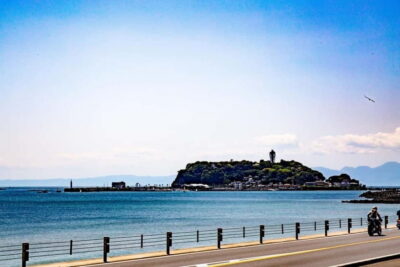 ★ 4.5Kamakura & Enoshima Day Trip including Temple TicketsFrom $581,375 reviews
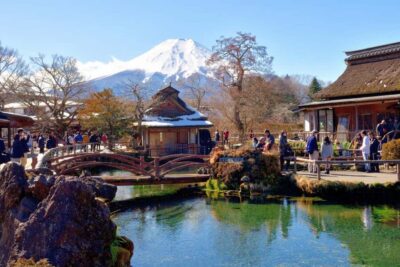 ★ 4.5Mt. Fuji, Kamakura, Big Buddha, & Lake Ashi Day TripFrom $49867 reviews
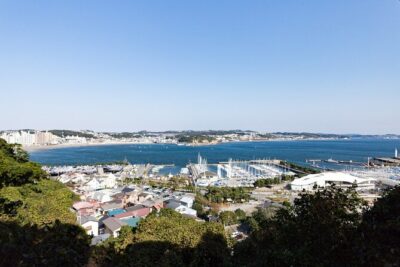 ★ 4.5From Tokyo: Kamakura & Enoshima 1-Day Bus TourFrom $66189 reviews
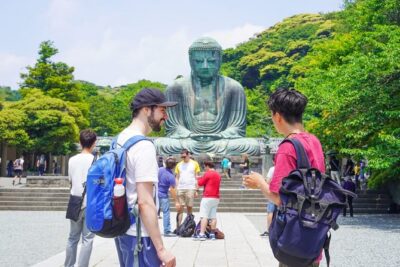 ★ 5.0Kamakura Historical Walking Tour with the Great BuddhaFrom $98129 reviews
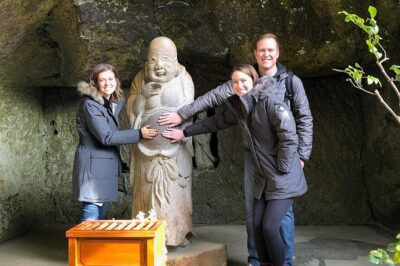 ★ 5.0Kamakura Private Tour: Temples, Nature, and the Great BuddhaFrom $98121 reviews
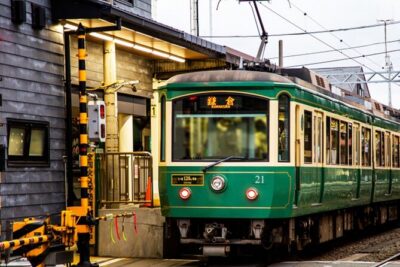 ★ 5.0Kamakura Walking Tour – The City of ShogunFrom $35100 reviews
 ★ 4.9Sea of Mount Fuji, Hakone Ropeway, Ōwakudani, EnoshimaFrom $5084 reviews
 ★ 5.0Kamakura 8 hr Private Walking Tour with Licensed Guide from TokyoFrom $20180 reviews
Browse the lists this tour appears in