
Reviewed · KAMAKURA DAY TRIPS
Kamakura One Day Hike Tour with Government-Licensed Guide
Kamakura is a temple and trail day in one. I like how this tour combines the Daibutsu Trail hike with major sights like Tsurugaoka Hachimangu Shrine and the Great Buddha area, without turning it into a rushed checkoff. I also like that your route can be adjusted around what you care about, so you can spend more time on the parts that matter to you. The main drawback: it’s still a walking day, so you’ll want comfortable shoes and a plan for paying some temple and activity costs that aren’t included.
What makes it feel extra solid is the National Government Licensed Guide Interpreter credential, the kind issued by Japan’s government and built for cultural and historical interpretation. In the best experiences from this tour, guides like Shinji Komiyama set the tone early by reaching out before the hike to ask what you want to focus on, then guide you in a way that actually connects the sites.
One more reality check: the tour is built around a 6-hour window, so you have to choose. If you try to cram in every famous stop on your own after this, Kamakura can feel like it’s running you instead of the other way around.
In This Review
- Key points at a glance
- Kamakura in a day: why this hike makes sense
- Government-licensed guide and customization that actually helps
- The Daibutsu Trail: your 6 km temple-to-temple walking core
- Shrine and Buddha stops: Tsurugaoka, Kotoku-in, and Hase-Dera style beauty
- Zen temple circuit: from Engaku-ji and Kencho-ji to the quieter hills
- Enoshima island: coastal color and a Mt. Fuji photo chance
- Price and what it really costs you on the ground
- Best fit: who should take this Kamakura hike
- Should you book this Kamakura One Day Hike Tour?
- FAQ
- How long is the Kamakura One Day Hike Tour?
- Where do I meet my guide?
- Is this a walking tour?
- What’s included in the price?
- What is not included?
- Can I customize the route?
- Is there private group service?
- Are service animals allowed?
- What is the cancellation policy?
Key points at a glance
- Government-licensed interpreting guide for cultural and historical context at each stop
- Customizable route focused on 3–4 sites, so you’re not stuck with someone else’s plan
- Daibutsu Trail walking (about 6 km / 3.7 miles) linking temple areas with hills and sea-side atmosphere
- Zen temple highlights across Kamakura’s famous “five great” Zen temple cluster
- Enoshima island side trip for coastal views, with Mt. Fuji possible in good weather
- Private group format means the pace and stops stay focused on your group only
Kamakura in a day: why this hike makes sense
Kamakura sits about an hour from Tokyo, close enough for a day trip yet far enough that it feels like its own world. The big win here is that you’re not only sightseeing. You’re moving through the hills and temple routes that shaped the area’s rhythm for centuries.
This tour is designed around a practical mix: shrine drama and samurai-era symbolism at Tsurugaoka Hachimangu, the iconic scale of the Great Buddha at Kotoku-in, then a walk that actually uses the terrain between temple zones. If you like Japan where history is visible at street level and on paths between places, this is a good fit.
You should also know the time format. You’re out about 6 hours, which can feel like a lot if you try to treat it as a slow museum visit. But it works well if you’re the type who likes to walk, take breaks, and let the day unfold.
Coast-and-Buddha days near Kamakura, rated
- Yokohama and Kamakura 6hr Private Trip Government-Licensed Guide
★ 5.0 · 25 reviews - Kamakura One Day Hike Tour with Government-Licensed Guide
★ 4.5 · 12 reviews
Government-licensed guide and customization that actually helps
A license is not a magic wand, but it matters when the plan includes culture-heavy stops. This tour uses a National Government Licensed Guide Interpreter. That usually means you’ll get explanations that don’t stop at the postcard facts. You get context you can understand on the spot—why a shrine matters, what a Zen temple network represents, and how Kamakura’s religious and political story connects.
The other big value is customization. You select your must-see spots from the options in the tour information, and the walking route is built around 3–4 sites from that choice. That’s a smart setup in a place like Kamakura, where the list of famous places can swallow a whole day.
From the experiences shared with this tour, guides also respond to interests in advance. In one case, Shinji asked what the group wanted, and the guide shaped the day around both a history overview and getting a good hike. In another experience, the guide organized the pace and shared context in a way that kept the day from feeling like a standard script.
What I’d watch for: the customization is great, but it’s not infinite. You’ll still be operating inside a 6-hour frame and a walking loop. So choose the sites you truly want to see, not just the ones you’ve heard of.
The Daibutsu Trail: your 6 km temple-to-temple walking core
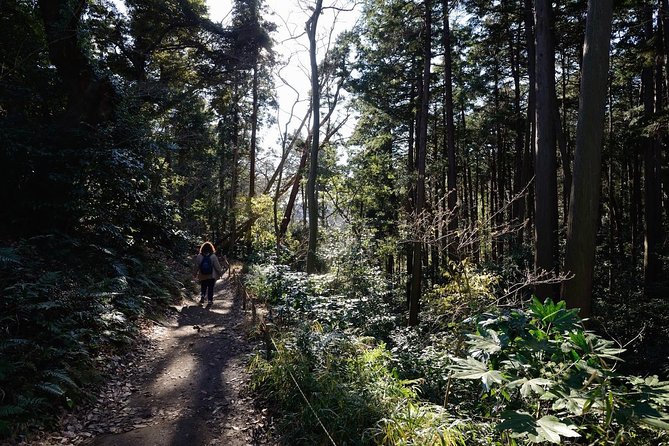
The heart of this day is the Daibutsu Trail, listed at about 3.7 miles (6 km). The idea is simple and satisfying: walk between Daibutsu (the Great Buddha area) to the north toward the Jochi-ji Zen temple region. Even when you’re not taking a long hike into the mountains, you get that hillside-to-temple feeling—paths that were made for people moving through sacred spaces.
One practical point from real experience: weather changes the walking texture fast. In at least one tour, rain the day before made the trail slippery, and the guide adjusted so the group could walk without trouble. That’s the kind of reassurance you want on a temple hike, because you can’t always control the weather, but you can control how you handle it.
Pace-wise, expect a chunk of the day to be spent walking between points, plus short stops where the guide sets context. If you’re expecting a brisk “run to the next photo” format, this tour is closer to an interpretive walk with time to look.
My suggestion: treat this as the workout portion of the day. Plan to take your photos, but also pause and listen when your guide explains what you’re standing in front of.
Shrine and Buddha stops: Tsurugaoka, Kotoku-in, and Hase-Dera style beauty
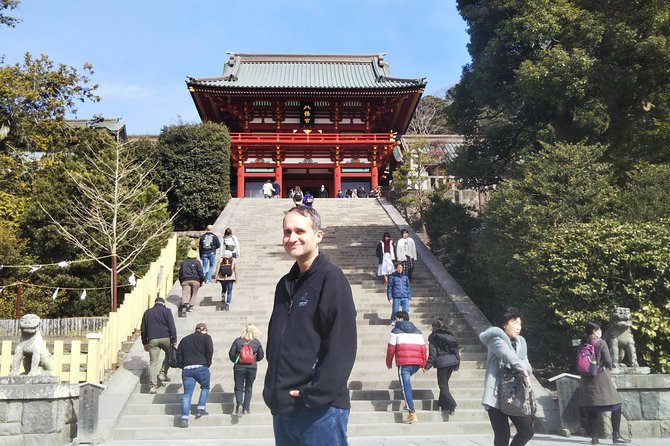
Start where many Kamakura days begin: Tsurugaoka Hachimangu Shrine. This shrine is dedicated to Hachiman, linked with the Minamoto family and samurai traditions in general. It’s the kind of stop where the atmosphere helps you understand why Kamakura became a power center in Japan’s feudal era. Expect an easy, straightforward visit with the guide pointing out what the symbolism means.
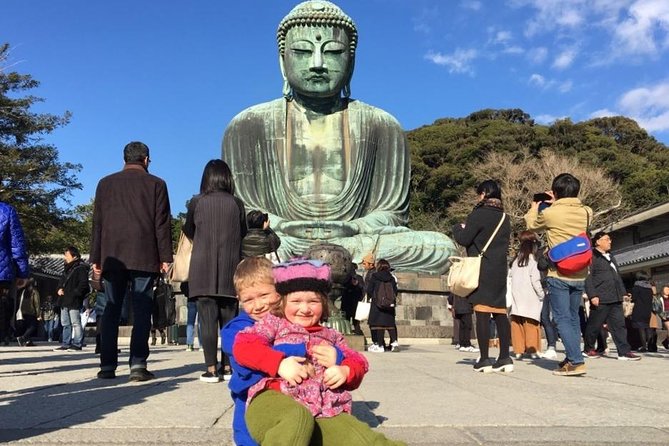
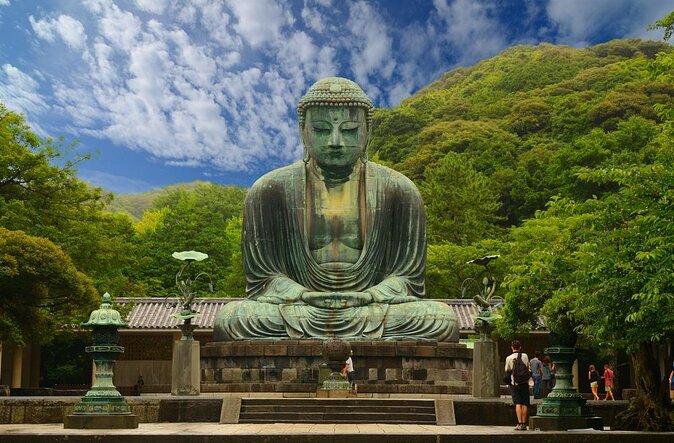
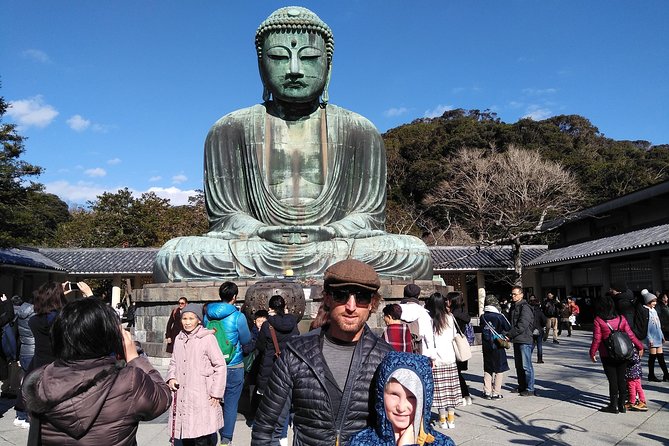
Next comes Kotoku-in, home to the Great Buddha of Kamakura. The statue is described as a bronze Amida Buddha, about 11.4 meters tall. Even if you’ve seen famous Buddhas elsewhere, this one hits differently because you’re seeing it from the temple grounds rather than in a museum context. It’s also a quick stop, which keeps the day from bogging down on one location.
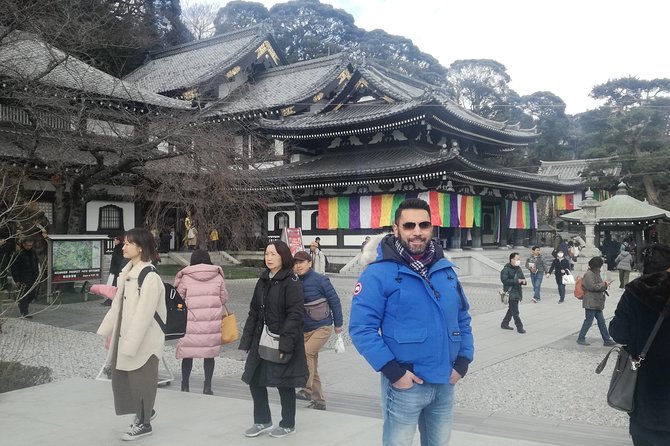
Then you’ll head to Hasedera Temple, known for an eleven-headed statue of Kannon (the goddess of mercy). The large gilded wooden figure is one of the reasons Hasedera earns its reputation. If you like Buddhist iconography—what the statues represent and how they’re used to express compassion—this is a strong choice.
From there, consider Hokoku-ji Temple, famous for a small bamboo grove behind the main hall, with over 2,000 bamboo stalks mentioned in the tour description. This is the kind of stop where you can feel the change in sound and light. It’s also a nice counterbalance to the larger shrine-and-Buddha scale.
A useful way to think about these stops: they’re not just different religions. They show different kinds of Japanese spiritual focus—political shrine authority, large-scale Buddha devotion, and specific compassion symbolism.
Zen temple circuit: from Engaku-ji and Kencho-ji to the quieter hills
Kamakura’s Zen temples are often described as a cluster for a reason. This tour hits major names across the five great Zen temples category, plus hillside branch temples that add variety without feeling like random wandering.
You start weaving through that network with Engaku-ji, one of the leading Zen temples in Eastern Japan, founded in 1282 by regent Hojo Tokimune. It’s the kind of place where the explanation matters. The guide can help you see beyond the architecture into what Zen temple foundations meant in Kamakura’s political era.
Then it’s Kencho-ji, described as the number one of Kamakura’s five great Zen temples and the oldest Zen temple in Kamakura, founded in 1253 during the Kencho era by regent Hojo Tokiyori. If you want a sense of depth—how early Zen took root here—Kencho-ji is a great anchor.
After that, you’ll move into smaller but meaningful stops like:
- Zeniarai Benten Shrine, where people wash money in a spring (the tour notes that washing money here is believed to bring results). This is practical and a bit playful compared to the more solemn temple halls.
- Meigetsuin, also known as Hydrangea Temple, tied to abundant hydrangea blooms on the grounds (great for seasonal photography if you hit the right time).
- Zuisen-ji, in a narrower valley and surrounded by wooded hills—one of those places where the setting is part of the experience.
- Jochiji Temple, described as the number four of the five great Zen temples and tied to Engaku-ji’s school.
There are also Nichiren sect and branch temples in the same hillside world: Ankokuronji and Myohonji, plus Jomyo-ji, Tokeiji, and Jufukuji. Even if you don’t track sect names perfectly, you’ll still get value because the guide connects how these sites fit into the broader Kamakura story.
One tip for enjoying this stretch: let yourself slow down during the Zen part. It’s easy to get “temple fatigue” after the Great Buddha and shrine areas. Zen temples work best when you give them a little quiet attention.
Readers also shortlisted these Yokohama bookings:
- Kamakura 6hr Private Walking Tour with Government-Licensed Guide★ 5.0 · 42 reviews
- Yokohama: Guided Cup Noodles Museum Tour & Make Your Own Cup★ 4.9 · 27 reviews
- Tokyo Full Day Tour with Licensed Guide and Vehicle from Yokohama★ 5.0 · 26 reviews
- Yokohama and Kamakura 6hr Private Trip Government-Licensed Guide★ 5.0 · 25 reviews
- Yokohama Full Day Tour with a Local Expert Guide★ 4.3 · 23 reviews
Enoshima island: coastal color and a Mt. Fuji photo chance
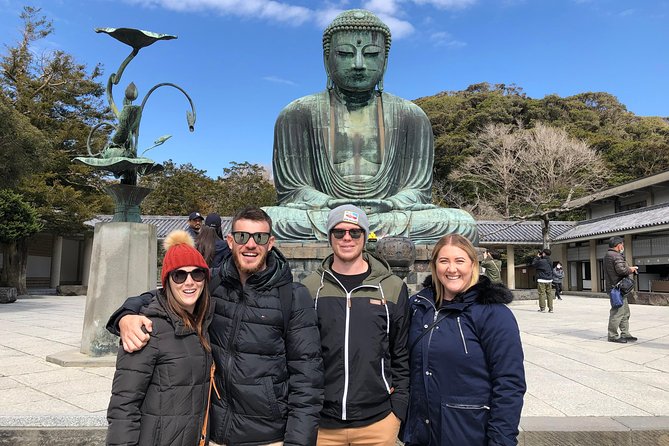
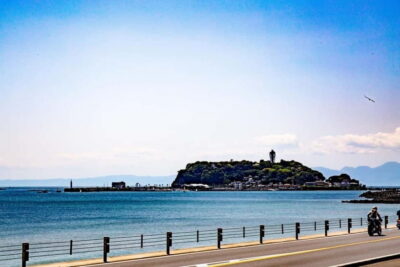
After the temple-and-trail rhythm, you get a short side trip to Enoshima Island. The tour notes it’s connected to the mainland by bridge and offers attractions including a shrine. It also positions Enoshima as a place that feels pleasantly touristy without being completely detached from local vibe.
This is also where weather can create a big payoff. In one guide experience, a photo request for Mt. Fuji turned into good fortune because Mt. Fuji was visible from Enoshima when the weather cooperated. That’s not guaranteed on any day, but it’s exactly why Enoshima is worth including in a Kamakura day.
If you’re planning your own day elsewhere in Japan and want a quick coastal break between temples, this stop is doing real work. It also gives you a different kind of walking: shorter, more relaxed, and closer to the sea than the hillside temple routes.
Price and what it really costs you on the ground
The listed price is $153.50 per person, with tours on average booked about 47 days in advance. That “booked ahead” detail matters. It suggests this isn’t the kind of activity most people can casually grab last minute in peak travel seasons.
So is it worth it? Here’s the value equation I’d use:
Included value
- A licensed local English speaking guide
- A customizable walking route (3–4 sites chosen from the options)
- Pickup offered, with meet-up on foot in the Kamakura/Yokohama area
- Mobile ticket and a private group setup
What’s not included (you should budget)
- Transportation fees
- Entrance fees
- Lunch and personal expenses
- Private transportation (so you’ll be using the walking/area logistics planned for the tour)
- Some guide entry coverage depends on which sights are selected from the included options
Here’s the practical takeaway: you should expect additional spending for temple entries and a meal. The tour description also flags that some sights are free (for example, Tsurugaoka Hachimangu is listed as free, and Zeniarai Benten is free), while others are not included (like Kotoku-in’s Great Buddha and several temple visits). If you build a small buffer for admissions and lunch, there won’t be any day-of stress.
One more practical note: it’s a walking tour, and the tour description says you cannot combine multiple tour groups. So if you’re a larger party and were hoping to stitch groups together, plan on staying within one booking.
Best fit: who should take this Kamakura hike
This tour is best for you if:
- You want context, not just photos
- You like walking days with short, meaningful stops
- You care about Japanese culture and history and want it explained in plain terms by a government-licensed guide interpreter
- You want flexibility through selecting 3–4 sites rather than being locked into a fixed mega-itinerary
It may be less ideal if:
- You want a purely relaxed, sitting-heavy day. The day is built on walking, and the Daibutsu Trail is a real distance.
- You’re trying to do Kamakura as a rushed stop during a tight travel schedule. One shared caution is that taking a 6-hour trip from Tokyo can feel like more “travel time outside the experience,” especially if you’re only adding Kamakura as a quick add-on. If Kamakura is the main event, you’ll enjoy it more.
Should you book this Kamakura One Day Hike Tour?
I’d book it if you want Kamakura to feel like a connected story: shrine to Buddha, then trail to Zen temples, then a coastal payoff at Enoshima. The mix of Daibutsu Trail walking plus culturally interpreted temple stops is a strong formula for first-timers and repeat Japan visitors alike.
I’d think twice if you’re trying to squeeze Kamakura into a day where you’re already doing too much transportation and already plan to rush. This tour works best when you let it be the focus.
If you book, pick your 3–4 must-see stops carefully. Choose the ones that match your mood for the day: big iconic sights, Zen calm, or hillside quiet. And bring shoes you’re happy to walk in for several hours, because the trail is the point.
FAQ
How long is the Kamakura One Day Hike Tour?
The tour lasts about 6 hours.
Where do I meet my guide?
You meet the guide at your hotel or the closest station, and the meet-up is on foot within the designated Kamakura/Yokohama area.
Is this a walking tour?
Yes. It’s a walking tour, and pickup is on foot.
What’s included in the price?
The price includes a licensed local English-speaking guide, a customizable walking tour of 3–4 sites, and the mobile ticket. Private group participation is also included.
What is not included?
Transportation fees, entrance fees, lunch, and other personal expenses are not included. Guide entry fees are only covered for sights listed under What to Expect.
Can I customize the route?
Yes. You can personalize the day by selecting your must-see spots from the options in the tour information, creating a route focused on 3–4 sites.
Is there private group service?
Yes. This is a private tour/activity, and only your group will participate.
Are service animals allowed?
Yes, service animals are allowed.
What is the cancellation policy?
You can cancel for a full refund up to 24 hours in advance of the experience’s start time. If you cancel less than 24 hours before, the amount paid is not refunded.
More Tours in Yokohama
- Daikoku & Tokyo Private JDM Tour by 700HP R34 GT-R
★ 4.9 · 101 reviews - Tokyo 8hr Private Tour with Licensed Guide from Yokohama
★ 5.0 · 94 reviews - 【Tokyo】JDM Daikoku Parking Area & Nissan Facility Tour
★ 5.0 · 87 reviews - Kamakura 6hr Private Walking Tour with Government-Licensed Guide
★ 5.0 · 42 reviews - Yokohama 4hr Private Tour with Government-Licensed Guide
★ 5.0 · 34 reviews
More Tour Reviews in Yokohama
- EVO, WRX, Skyline – JDM Night Run to Daikoku Car Meet
★ 4.9 · 478 reviews - Tokyo: Best Price Daikoku Parking Area JDM Car Meet
★ 4.9 · 192 reviews - Daikoku & Tokyo Private JDM Tour by 700HP R34 GT-R
★ 4.9 · 101 reviews - Tokyo 8hr Private Tour with Licensed Guide from Yokohama
★ 5.0 · 94 reviews - 【Tokyo】JDM Daikoku Parking Area & Nissan Facility Tour
★ 5.0 · 87 reviews
More Kamakura and Enoshima Days
- Kamakura 6hr Private Walking Tour with Government-Licensed Guide
★ 5.0 · 42 reviews - Yokohama and Kamakura 6hr Private Trip Government-Licensed Guide
★ 5.0 · 25 reviews
Latest Yokohama reviews off our desk



Kamakura Day Trips, compared.
 ★ 4.5Kamakura & Enoshima Day Trip including Temple TicketsFrom $581,375 reviews
 ★ 4.5Mt. Fuji, Kamakura, Big Buddha, & Lake Ashi Day TripFrom $49867 reviews
 ★ 4.5From Tokyo: Kamakura & Enoshima 1-Day Bus TourFrom $66189 reviews
 ★ 5.0Kamakura Historical Walking Tour with the Great BuddhaFrom $98129 reviews
 ★ 5.0Kamakura Private Tour: Temples, Nature, and the Great BuddhaFrom $98121 reviews
 ★ 5.0Kamakura Walking Tour – The City of ShogunFrom $35100 reviews
 ★ 4.9Sea of Mount Fuji, Hakone Ropeway, Ōwakudani, EnoshimaFrom $5084 reviews
 ★ 5.0Kamakura 8 hr Private Walking Tour with Licensed Guide from TokyoFrom $20180 reviews
Browse the lists this tour appears in