
Reviewed · TEA CEREMONY & MATCHA
Hands-On Japanese Craft in Tokyo with Mochi Wagashi & Matcha
Paper flowers meet matcha in Tokyo. This hands-on class pairs a take-home uchiwa craft with a relaxed tasting of matcha latte and two wagashi.
What I like is how practical it feels: you’re not just watching, you’re designing, decorating, and finishing your fan so it becomes a real souvenir. I also like that the food part is beginner-friendly, especially the matcha latte, plus wagashi that are fun to look at and easy to share.
One thing to consider: the experience needs good weather, and there’s no hotel pickup or drop-off listed, so you’ll want to plan your own way to the meeting point.
In This Review
- Key highlights worth your time
- Crafting an uchiwa fan that actually becomes your souvenir
- Designing your uchiwa: pressed flowers, origami-style paper, and your own layout
- Building a fan that looks different from everyone else
- Matcha latte time: creamy, mild, and less intimidating
- Two wagashi: modern monaka and a Kokedama-inspired sweet
- Modern monaka (crispy wafer + custard cream + mochi)
- Kokedama-inspired sweet (moss-ball look)
- What the $78.69 price covers—and how to judge the value
- The short duration that actually helps (if you plan for it)
- Who this uchiwa and matcha class suits best
- Planning tips for a smooth visit in Tokyo
- Should you book this uchiwa and matcha experience?
- FAQ
- How long is the experience?
- What’s included in the price?
- What do I make during the class?
- Is hotel pickup or drop-off included?
- What’s the group size limit?
- Are there weather requirements or cancellation options?
Key highlights worth your time
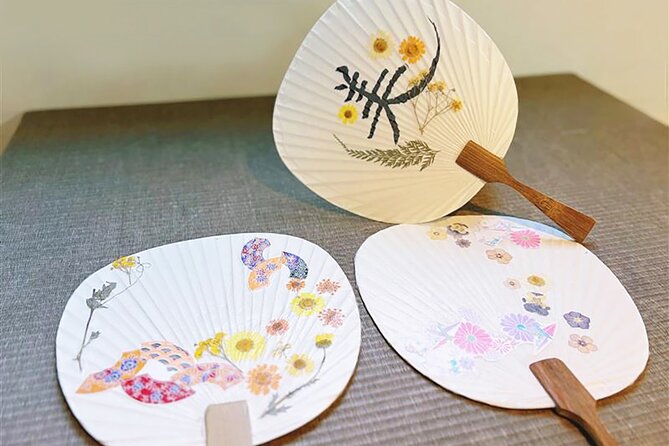
- Pressed-flower uchiwa craft: decorate a round paper fan with nature-inspired details
- Origami-pattern paper: your fan design isn’t limited to one style or one look
- Matcha latte for first-timers: milk makes it smoother and milder than plain matcha
- Two wagashi with different vibes: modern monaka plus a Kokedama-inspired sweet
- Small group size (max 15): more hands-on time and less crowding
Crafting an uchiwa fan that actually becomes your souvenir
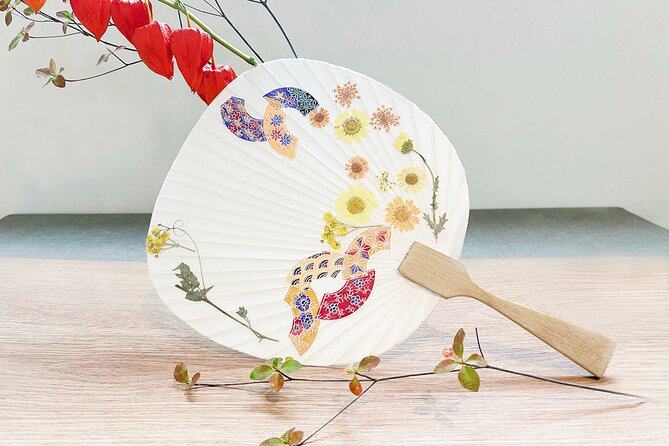
This is the kind of Tokyo experience I recommend when you want something cultural but not stuffy. The core activity is making a Japanese uchiwa, the round paper fan used for cooling down during warmer months. In a lot of workshops, you leave with a decorative item that’s technically handmade. Here, you’re making a usable, familiar object with a personal design—pressed flowers, Japanese-patterned paper, and your own arrangement—so it feels like you brought a piece of Japan back with you, not just a ticket.
The tone of the class is also built for comfort. The matcha portion is explicitly designed to be approachable for first-time tasters, and the wagashi options are set up to be enjoyable even if you don’t always go for traditional flavors. In practice, that matters because a short 1.5-hour experience can feel stressful if it’s too advanced or too precious. This one is designed to feel friendly and doable.
More tea rooms our readers rated
- Matcha Making Class in Tokyo with Authentic Japanese Sweets Set
★ 5.0 · 744 reviews - Tokyo: Traditional Tea Ceremony with a Tea Master
★ 5.0 · 528 reviews - Tokyo: Matcha Making Experience with Mochi Sweets in Asakusa
★ 4.9 · 388 reviews - Tokyo: Matcha and Kimono Experience
★ 4.7 · 219 reviews
Designing your uchiwa: pressed flowers, origami-style paper, and your own layout
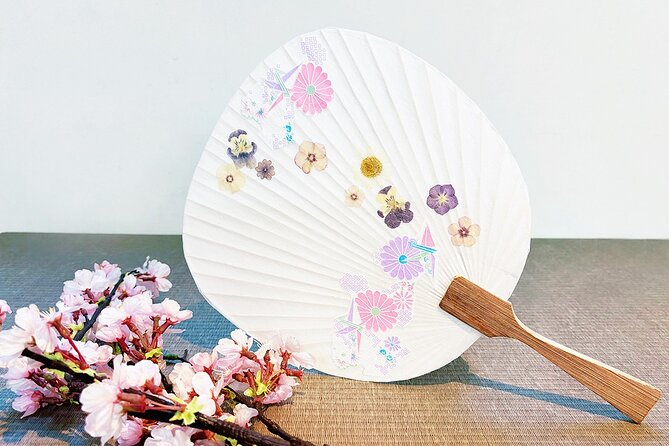
Your uchiwa starts as a round paper fan, and your job is to make it yours. You’ll decorate it using pressed flowers and Japanese-patterned origami paper. The overall idea is nature appreciation—plants and seasonal materials—turned into something visual you can hold.
A detail that makes this craft more than a simple sticker project is the way the materials are handled and finished. One participant notes that they were able to imprint their design using an iron as part of the process, which suggests the workshop uses a careful step to help elements adhere or set properly. For you, that’s a big deal: it’s what helps your fan look clean after the class and survive travel better in your bag.
A practical takeaway: keep your design plan simple. Even with guidance, you’re working with real materials like pressed flowers, which can be delicate. If you go for a bold layout with a clear focal point, your finished fan will read well in photos—and it won’t rely on tiny details to look good.
Building a fan that looks different from everyone else
The best souvenirs aren’t copies. This class is structured so your fan ends up unique, not mass-produced. With pressed flowers, you’re working with natural shapes and textures, and with the origami-patterned paper you can create a contrast between printed patterns and organic elements.
Also, there’s a nice learning payoff. You’ll see how Japanese seasonal aesthetics show up in a small everyday item. That’s a subtle cultural win: an uchiwa isn’t only decorative. It’s tied to how people respond to the weather, how they use plants and materials, and how they turn craft into daily life.
And yes, you’ll want to take photos. The experience is designed to be shareable—partly because your fan design will be visibly your own, and partly because you’ll likely want a record of the finished look.
Matcha latte time: creamy, mild, and less intimidating
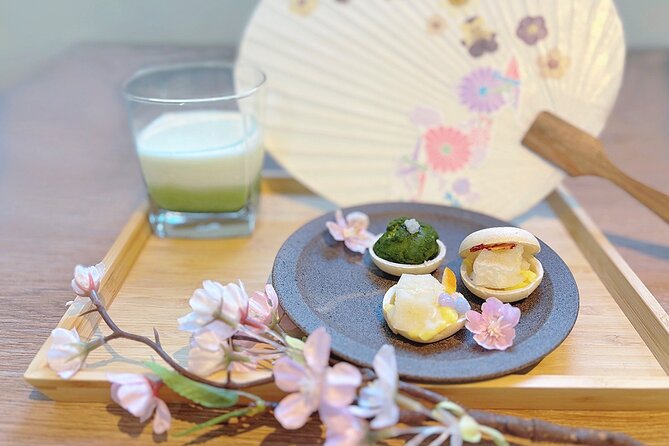
After the crafting, you move into tasting: matcha latte and two types of wagashi. If you’re worried about matcha because you think it’ll be too bitter, this is the safer route. Matcha latte is made by mixing powdered matcha with milk, which creates a smooth, creamy drink that’s less harsh than plain matcha.
That “less bitter” description isn’t just marketing—it changes the experience. Plain matcha can taste grassy or strong for first-timers. Milk softens those edges, so you can focus on the tea’s flavor instead of fighting the bitterness.
You don’t need to be a tea expert to enjoy it. The workshop frames it as easy to try even on your first go. If you’re bringing kids or friends who aren’t sure about matcha yet, this format is a smart choice.
Two wagashi: modern monaka and a Kokedama-inspired sweet
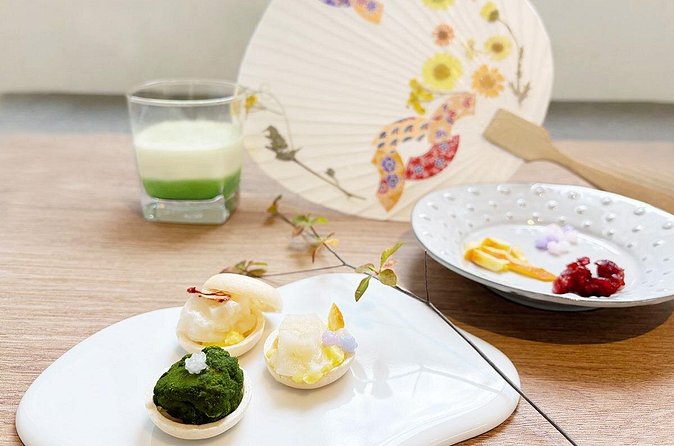
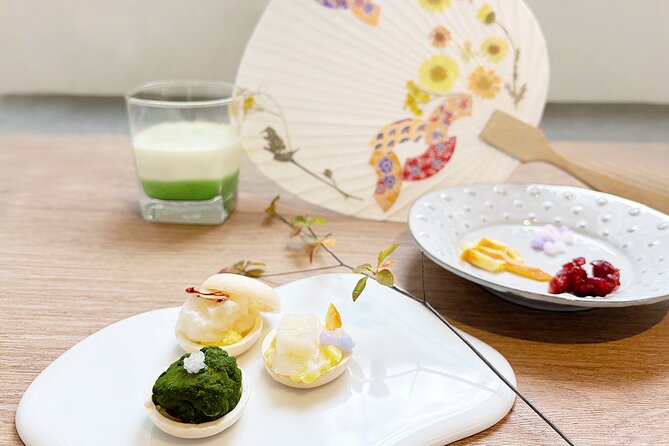
Wagashi can be tricky on a workshop schedule because some sweets are tiny and some are dense. Here, you get two distinct styles that make it easier to compare and enjoy without feeling overloaded.
Readers also shortlisted these Tokyo bookings:
- Sushi Making Tokyo Roll and Authentic Japanese Sushi Class★ 5.0 · 3,971 reviews
- Tokyo: Roll and Authentic Sushi Making Class in Asakusa★ 4.9 · 1,957 reviews
- Tokyo Shinjuku Chopsticks Making Class★ 5.0 · 1,763 reviews
- Tokyo: Sushi Making Class in a Happi Coat near a Famous Spot★ 4.9 · 1,377 reviews
- Chopstick Making Workshop in Ginza★ 4.8 · 1,366 reviews
Modern monaka (crispy wafer + custard cream + mochi)
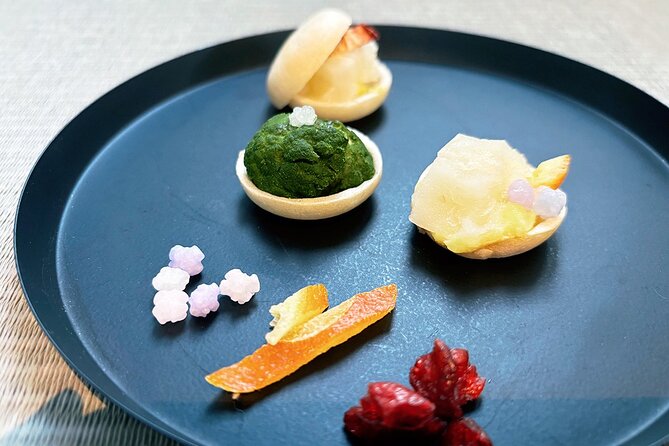
Monaka is typically known as a crisp wafer filled with sweet fillings. In this class, you’ll try a modern monaka version built from a crispy wafer plus custard cream and mochi, topped with dried fruit. If you usually avoid sweets because you don’t love classic red bean paste, the setup is designed to be more broadly appealing.
For you, the value is not just taste—it’s structure. You get to experience the classic idea of monaka (crisp shell, sweet center) while also trying a contemporary twist (mochi texture and custard cream).
Kokedama-inspired sweet (moss-ball look)
Next is a dessert inspired by Kokedama, the style of Japanese gardening where a plant is grown in a ball of soil covered with moss. The sweet is designed to look like a cute little moss ball.
This one is fun because it shows how Japanese aesthetics travel beyond gardens. Even if you don’t care about gardening, you can still enjoy the idea: a familiar cultural concept turned into a playful edible object. It’s also great for photos because the shape is instantly recognizable.
What the $78.69 price covers—and how to judge the value
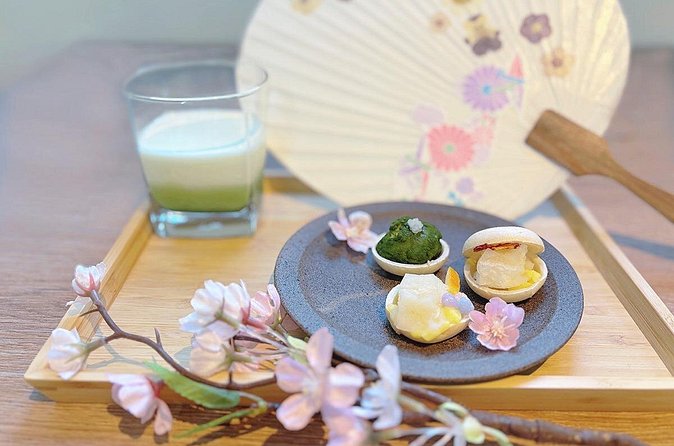
At $78.69 per person for about 1 hour 30 minutes, you’re paying for a compact combo: hands-on crafting plus a sit-down tasting. The included items are clear—matcha latte and two types of wagashi—and that matters when you’re comparing to “bring-your-own snack” activities.
Value-wise, you’re not only buying ingredients and instruction. You’re buying the workflow: materials prepared for decorating, guidance during the craft, and a tasting built to match the tea theme. You also get a small group setup (max 15), which usually means you’re less likely to feel rushed and more likely to finish with something you’re happy to take home.
One more practical point: because hotel pickup/drop-off isn’t included, you’ll want to account for your own transportation costs. That can make the final “all-in” price slightly higher than the base listing amount, depending on where you’re staying.
The short duration that actually helps (if you plan for it)
Ninety minutes sounds quick because it is quick. But for a craft-and-taste format, it works. You get enough time to design and finish the uchiwa, then transition to matcha and wagashi without the fatigue that can come from longer classes.
Here’s how to make the most of that time:
- Arrive with an easy plan for your fan layout (a strong center motif helps)
- Treat the matcha latte as part of the experience, not an afterthought—slower sips make it taste better
- Expect that you’ll be moving once: craft, then tasting, then leaving with your fan
If you’re also doing other Tokyo stops the same day, this timing is a good fit. It’s long enough to feel like a real activity, short enough that you won’t lose your whole afternoon.
Who this uchiwa and matcha class suits best
This is a strong choice if you want a hands-on cultural activity that isn’t technical. It’s especially good for:
- People who like DIY souvenirs and want something you can take home
- First-time matcha drinkers (the latte is milder)
- Anyone who enjoys photos with a clear, finished end product
- Groups that want a friendly, approachable workshop with a small ceiling of participants
It may not be ideal if you dislike any kind of paper craft, or if you want a deep lecture. This experience is designed around doing and tasting, not extended history lessons.
Planning tips for a smooth visit in Tokyo
Because there’s no hotel pickup listed, you’ll need to get yourself to the meeting point in Tokyo. That’s normal, but it’s worth planning early—Tokyo addresses can be easier when you’re using a map app and arriving a little early.
Also, the operator notes good weather as a requirement. I can’t promise the class is outdoor, but it does mean your date matters. If you’re booking during rainy season, keep an eye on the forecast.
Finally, bring realistic expectations for a small-group setting. With up to 15 people, the room won’t be silent. You’ll likely have a social hum, which can be good. If you need absolute quiet, you might prefer a private activity instead.
Should you book this uchiwa and matcha experience?
I’d book it if you want a short, memorable Tokyo activity that produces a tangible souvenir and includes food that’s made for first-timers. The uchiwa craft is the main event, and the matcha latte plus monaka and Kokedama-inspired sweets make it feel complete rather than like a snack-only add-on.
Skip it only if you’re not interested in paper craft at all, or if you’re traveling on a tight schedule where the good-weather requirement is risky. For most people, this is a clean value play: you pay for instruction, materials, and a tasting you can’t easily recreate at home.
FAQ
How long is the experience?
It runs for about 1 hour 30 minutes.
What’s included in the price?
You get matcha latte and two types of wagashi.
What do I make during the class?
You design and decorate your own uchiwa (Japanese fan) using pressed flowers and Japanese-patterned origami paper, and you take it home.
Is hotel pickup or drop-off included?
No. Hotel pickup and drop-off are not included.
What’s the group size limit?
The experience has a maximum of 15 travelers.
Are there weather requirements or cancellation options?
Yes, it requires good weather. You can cancel for free up to 24 hours in advance for a full refund.
More Workshops in Tokyo
- Sushi Making Tokyo Roll and Authentic Japanese Sushi Class
★ 5.0 · 3,971 reviews - Tokyo: Roll and Authentic Sushi Making Class in Asakusa
★ 4.9 · 1,957 reviews - Tokyo Shinjuku Chopsticks Making Class
★ 5.0 · 1,763 reviews - Tokyo: Sushi Making Class in a Happi Coat near a Famous Spot
★ 4.9 · 1,377 reviews - Chopstick Making Workshop in Ginza
★ 4.8 · 1,366 reviews
More Tour Reviews in Tokyo
- Mt Fuji and Hakone 1-Day Bus Tour Return by Bullet Train
★ 5.0 · 26,383 reviews - 1-Day Tokyo Bus Tour
★ 5.0 · 14,250 reviews - Tokyo: teamLab Planets TOKYO Digital Art Museum Entry Ticket
★ 4.6 · 9,779 reviews - Mt Fuji & Hakone Cruise, Drum Show Bullet Train 1 Day from Tokyo
★ 4.0 · 7,413 reviews - Tokyo: Shinjuku Food Tour (13 Dishes at 4 Local Eateries)
★ 5.0 · 6,603 reviews
More Tea and Matcha Rooms
- Matcha Making Class in Tokyo with Authentic Japanese Sweets Set
★ 5.0 · 744 reviews - Tokyo: Traditional Tea Ceremony with a Tea Master
★ 5.0 · 528 reviews - Tokyo: Matcha Making Experience with Mochi Sweets in Asakusa
★ 4.9 · 388 reviews - Tokyo: Matcha and Kimono Experience
★ 4.7 · 219 reviews - Tea Ceremony Workshop in Tokyo by the Experienced Instrucor
★ 5.0 · 189 reviews
Latest Tokyo reviews off our desk






Tea Ceremony & Matcha, compared.
 ★ 5.0Matcha Making Class in Tokyo with Authentic Japanese Sweets SetFrom $21744 reviews
 ★ 5.0Traditional Tea Ceremony with a Tea MasterFrom $38528 reviews
 ★ 4.9Matcha Making Experience with Mochi Sweets in AsakusaFrom $22388 reviews
 ★ 4.7Matcha and Kimono ExperienceFrom $57219 reviews
 ★ 5.0Tea Ceremony Workshop in Tokyo by the Experienced InstrucorFrom $38189 reviews
 ★ 4.9Asakusa Kimono Dressing and Matcha ExperienceFrom $56173 reviews
 ★ 4.9Asakusa: Kimono Tea Ceremony with Matcha and SweetFrom $66153 reviews
 ★ 5.0Make Traditional Nerikiri Sweets & Matcha experience in ShibuyaFrom $60130 reviews
Browse the lists this tour appears in